
AI in Africa’s Oil and Gas: Use Cases and Best Practices 2026
Imagine you are running a big factory of oil and gas in Africa. You want to make it safer, cheaper to run, and better for the environment. In 2026, many oil and gas companies across Africa are using Artificial Intelligence (AI) to do exactly that.
AI is like a very smart helper that looks at huge amounts of data from machines, pipes, and sensors, and then warns people before something goes wrong. It helps companies avoid accidents, reduce waste, and make more money from the same equipment.
The big difference now is that companies are not just “testing” AI in small experiments. They are putting AI into real daily work on rigs, pipelines, and refineries, and they are doing it in a way that can be checked, audited, and trusted.
If you are planning how to use AI or need help explaining your AI vision to your management or partners, TmatNetwork can support you with strategy and stakeholder communication through AI Consulting and clear technical storytelling via Technology Digital Marketing Services.
Quick Summary: Where AI Helps Most
Here is a simple overview of how AI helps in oil and gas across Africa:
- Upstream: Finding oil and gas faster, drilling better, and planning how much oil and gas will come out of the ground.
- Midstream: Keeping pipelines and pumps healthy, finding leaks early, and planning routes for trucks and ships.
- Downstream: Running refineries more smoothly, planning how much fuel people will need, and setting better prices where allowed.
- Health, Safety, and Security: Checking if workers wear safety gear, spotting gas leaks, and learning from past incidents.
- Data and Equipment: Making AI work even when there is poor internet or old equipment.
- Local Skills: Training local people and working with African universities and service firms.
- Governance: Treating AI like any other important system, with strong checks, documents, and safety rules.
- Return on Investment (ROI): Starting with the most important, high-value problems, proving results, and then growing from there.
Upstream: Finding, Drilling, and Planning Production
“Upstream” means finding oil and gas in the ground and getting it out. AI helps experts look at underground pictures and signals faster and more accurately. Instead of taking weeks to study the data, AI can do much of the heavy lifting in days and show geologists where to look more closely.
During drilling, many numbers come from sensors on the drilling rig. AI watches these numbers in real time and warns if the drill might get stuck or if something looks unsafe. The human driller is still in charge, but AI acts like an assistant that can watch everything at once, all the time.
For planning, AI combines past production data, engineering rules, and machine learning to predict how much oil and gas different wells will produce. This helps with budgeting, planning how many ships and trucks will be needed, and managing gas supply.
When you want to share these technical wins with executives or the board in a simple and clear way, TmatNetwork’s Enterprise Digital Marketing Services can help you turn complex results into easy-to-understand reports and visuals.
Midstream: Taking Care of Pipelines and Transport
“Midstream” is about moving oil and gas from where it is produced to where it is processed or sold. This involves pipelines, compressor stations, pump stations, trucks, barges, and ships.
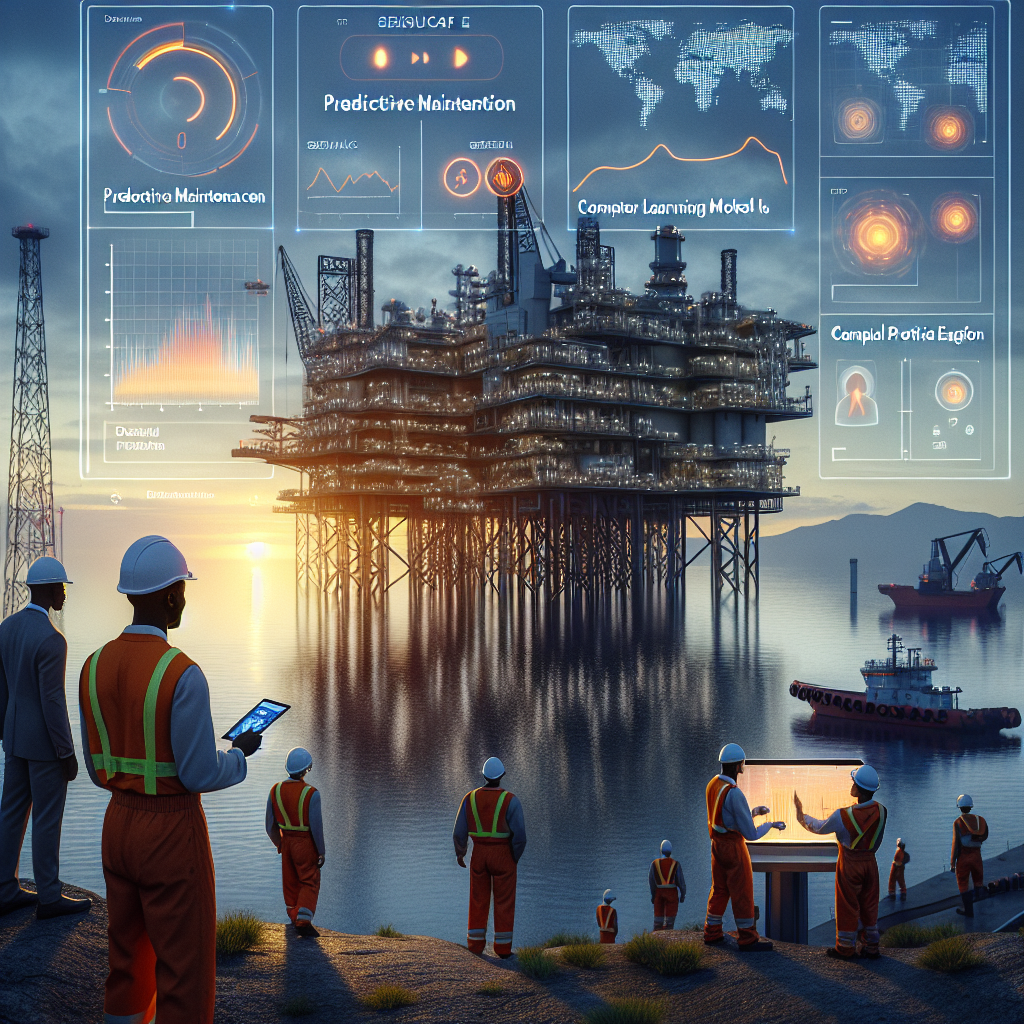
AI can watch the flow, pressure, temperature, and vibration data from these systems and notice small changes that humans might miss. This is called “predictive maintenance.” It means fixing things before they break, which avoids costly shutdowns and accidents.
For leaks, AI can combine data from pipes, special cameras, and sometimes even satellites to find possible leaks faster and more accurately. This helps protect the environment and nearby communities.
AI can also help plan routes for fuel trucks and ships by looking at traffic, road conditions, weather, and security alerts. This reduces delays and extra costs like waiting charges at ports or depots.
If you need to explain these new capabilities to internal teams or partners, you can use TmatNetwork’s Digital Marketing Services to create clear messages, pages, and launch plans.
Downstream: Refineries, Fuel Demand, and Pricing
“Downstream” covers refineries, depots, and fuel stations. AI helps refineries run more smoothly by estimating important values that are hard or slow to measure directly. This helps operators adjust controls to get better yields and use less energy.
AI can also forecast how much fuel people will need in different cities or stations by looking at past demand, holidays, weather, and economic activity. This reduces the risk of running out of fuel or storing too much.
In markets where companies have some freedom on price, AI can help understand how customers react when prices change. This allows smarter promotions that do not destroy profit.
TmatNetwork’s Technology Digital Marketing Services can help you explain these AI improvements to customers and partners in simple, trustworthy language.
Health, Safety, and Security: Protecting People and the Environment
Safety is one of the most important reasons to use AI. For example, cameras with AI can check if workers are wearing helmets, gloves, vests, and goggles. The processing can happen on small computers on site, so only alerts and summaries are sent, not full video, which helps protect privacy.
AI can analyze images from special cameras and data from gas sensors to find leaks quickly and suggest where the leak might be coming from. It can also help estimate how fast a gas cloud might spread, so teams know how to respond.
AI can read written safety reports, incident logs, and near-miss notes and look for patterns, such as frequent problems with certain tools or contractors. This helps safety teams decide where to focus training and improvements.
To help your cybersecurity and safety teams explain these complex topics to everyone in the company, you can use TmatNetwork’s Cybersecurity Digital Marketing services.
Data and Equipment: Making AI Work in Tough Conditions
Many oil and gas sites in Africa have unstable power, weak internet, and older control systems. AI solutions need to be designed to work under these real-world conditions.
One approach is “edge-first” design. This means putting AI models on small, strong computers near the machines. These devices do the main work locally and only send summaries when the network is available.
Models must be small enough to run on limited hardware and smart enough to handle noisy or imperfect data. Good monitoring and the ability to roll back to older, trusted models are key.
Clear agreements on how data is named, stored, and shared between operations, IT, and data teams help everyone work faster and avoid constant rework.
Local Content and Skills: Building African Expertise
For AI in oil and gas to last, African countries need local experts, not just foreign tools. Companies can partner with universities and local service firms to create joint labs, training programs, and real projects using anonymized operational data.
Students can work on real problems, such as leak detection, safety text analysis, or refinery soft sensors, and the best of them can be hired into the company. Training should cover practical skills like Python, cloud and edge basics, and how to keep operations safe and secure.
TmatNetwork’s Recruitment Digital Marketing Agency services can help oil and gas firms present themselves as attractive employers for this new wave of talent.
Governance and Risk: Clear Rules and Human Control
Because AI affects safety, environment, and money, it must be governed with strong rules. Each AI system should have clear tests it must pass before it is used in production.
Companies should keep records that explain what each model does, what data it uses, key assumptions, and known limitations. When equipment or processes change, the models and documents should be updated.
Cybersecurity is also critical. Systems should be protected so that attackers cannot change models or data. Networks should be segmented, access should be limited, and software should be signed and monitored.
Most importantly, people must stay in charge. AI should suggest actions, but human operators should make the final decisions, especially for safety-critical steps.
ROI and Scaling: Prove Value and Then Grow
To justify investment, each AI use case should be connected to a clear business measure, such as fewer accidents, less downtime, less fuel used, or higher production.
A good approach is to run a pilot for a few months, compare results to a baseline, and confirm that the AI system really helps. Once a pattern works in one place, companies can reuse the same data structures, features, and deployment methods in other fields and plants.
Contracts with vendors can be designed so that both sides are rewarded when agreed outcomes are achieved, and so that the company keeps clear control of its own data and models.
TmatNetwork’s B2B Digital Marketing services can help turn these results into strong case studies and presentations for partners, investors, and regulators.
Conclusion: Start Where Safety and Uptime Matter Most
The best starting point for AI in Africa’s oil and gas sector is where safety and uptime are most important. Begin with a clear problem, prove that AI brings better results, and then copy the successful pattern to other areas.
Design AI systems that can handle rough field conditions, test them carefully, and invest in local people so that knowledge stays in Africa. Over time, this builds safer operations, lower costs, and stronger communities.
When you are ready to prioritize your ideas, build a practical roadmap, or explain results to leadership and partners, TmatNetwork’s experts can help through AI Consulting. For clear, professional reports and visuals about your AI safety and reliability wins, you can also use Marketing Collaterals from TmatNetwork.
Comments are closed