TmatNetwork

Category: Marketing

Core marketing concepts, trends, and tactics to help businesses plan, execute, and scale effective growth campaigns.

  • Email Marketing Services in Kenya: Proven ROI Boosters That Work

    Email Marketing Services in Kenya: Proven ROI Boosters That Work

    Why email still delivers unbeatable ROI

    Email remains the steady revenue engine in a noisy digital world. While algorithms shift and ad costs rise, owned channels like email give brands in Kenya predictable reach, precision targeting, and compounding growth. In 2026, the brands winning market share are not shouting louder; they are building smarter email programs that attract the right subscribers, automate high-intent journeys, and measure every shilling of impact.

    If you are evaluating email marketing services in Kenya, think beyond blasts. The goal is a lifecycle system that greets new subscribers, nudges hesitant shoppers, reactivates sleepers, and rewards champions. When strategy, data, design, and deliverability align, email can consistently outperform other channels on profit per message sent.

    In a market where mobile usage dominates and consumers expect fast, personalized experiences, email offers the most direct path from attention to action. With strong consent, modern templates, and reliable infrastructure, your list becomes an asset that appreciates over time rather than a cost center.

    This guide shows how to build a modern, revenue-focused email program tailored to Kenyan audiences: list growth that respects privacy, automations that convert, mobile-first design, bulletproof deliverability, and clear attribution. Use it as a blueprint to move from sporadic campaigns to a system that scales.

    Quick Summary: List growth, automations, and optimization

    • List growth that compounds: High-value lead magnets, friction-light forms on site and at checkout, ethical consent capture, and preference centers that shape content.
    • Lifecycle automation that sells: Welcome, browse and cart recovery, post-purchase, win-back, and VIP exclusives tied to customer value and behavior.
    • Optimization that never sleeps: Mobile-first templates, dynamic content blocks, rigorous A or B testing, domain alignment, and deliverability monitoring.
    • Attribution that proves value: Clean UTM taxonomy, revenue tracking, assisted conversion modeling, and cohort reporting that informs budget decisions.
    • Local strength: Tactics aligned with Kenya privacy standards, mobile engagement patterns, and seasonal shopping behavior such as holiday and back-to-school spikes.

    List Building: Lead magnets, forms, compliance

    Healthy revenue starts with healthy acquisition. Your list should grow every week with people who clearly consent to hear from you and receive value from day one.

    Lead magnets that resonate

    • Instant value offers: first order discount, free shipping, or a members-only price list for retail and ecommerce.
    • Content assets: buyer guides, price calculators, or checklists for B2B firms and services. Pair email capture with strong SEO to compound growth. See SEO Services.
    • Event and webinar registrations: high-intent acquisition that feeds nurtures and sales cycles, especially for B2B. Explore B2B Digital Marketing.

    Friction-light forms everywhere

    • Header, footer, and exit-intent popups on high-traffic pages. Ensure mobile-first layouts and minimal fields. If your site needs a refresh, consider Website Development or Web Design Development.
    • Checkout opt-ins and post-purchase opt-ins with clear value exchange. For ecommerce stacks, review E-commerce Website.
    • Lead forms on social and paid channels synced to your ESP. Support with targeted traffic via PPC Service and SMM Services.

    Consent and compliance

    • Use explicit, informed consent. Log timestamp, source, and IP where possible.
    • Honor Kenya privacy standards and align with global best practices: easy unsubscribe, clear purpose, and secure data handling.
    • Deploy a preference center where subscribers choose topics, frequency, and format. This improves engagement and reduces complaints.

    Quality over quantity

    • Protect your sender reputation: avoid imports without proof of consent.
    • Enable double opt-in for higher-risk sources. Clean inactive or invalid contacts regularly.
    • Use a dedicated tracking domain and strong authentication to increase inbox placement from the start.

    Lifecycle Automation: Welcome, cart, win-back, VIP

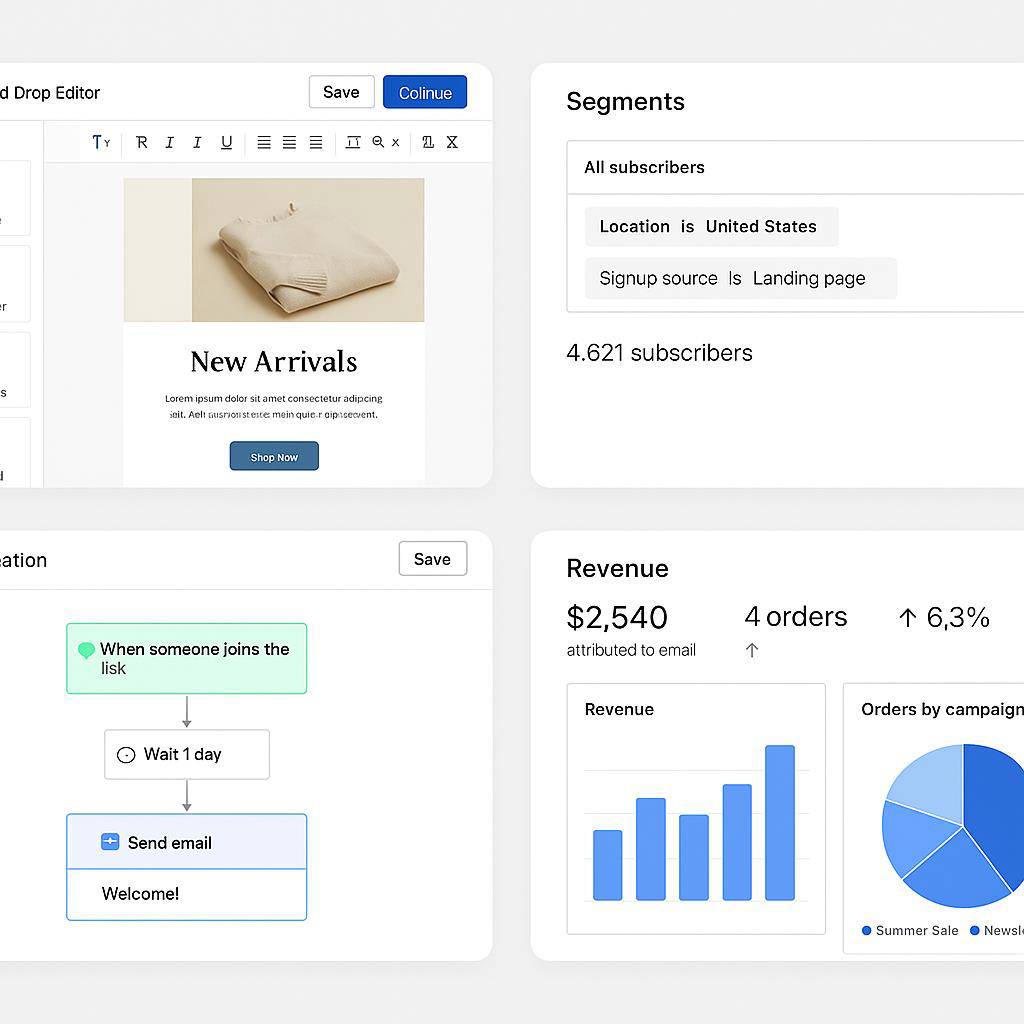
    Automation converts intent into revenue around the clock. Each automated flow should have a clear trigger, audience, message, and KPI. Here are the core flows every brand using email marketing services in Kenya should run.

    Welcome series

    • Trigger: New subscriber or account sign-up.
    • Structure: 2 to 4 emails in 7 days. Introduce the brand, social proof, benefits, and a time-bound incentive.
    • KPIs: Conversion rate first 7 to 14 days, revenue per recipient, and list engagement.

    Browse and cart recovery

    • Trigger: Viewed product or added to cart without purchase.
    • Structure: 2 to 3 emails. Start with reminders and value props, then add urgency and social proof.
    • Data: Feed live images, price, and stock using a product catalog. Pair with Ecommerce Management Services for merchandising and reporting support.

    Post-purchase and cross-sell

    • Trigger: Completed order.
    • Structure: Order confirmation, care instructions, how-to content, then relevant cross-sells based on SKU or category.
    • Goal: Increase repeat purchase rate and reduce returns with education.

    Win-back sequence

    • Trigger: No purchase or engagement for 60 to 120 days, depending on buying cycle.
    • Structure: 2 to 3 emails. Relevance first, incentive second. Suppress chronic non-openers to protect reputation.
    • Optional: Last chance re-permission campaign before sunset.

    VIP exclusives

    • Audience: Top 5 to 10 percent by lifetime value or order frequency.
    • Benefits: Early access, limited editions, concierge support, or invitations to events.
    • Outcome: Higher retention, word of mouth, and stable revenue during promotions.

    For complex stakeholder journeys, such as B2B demos, events, and proposals, augment email with landing pages and sales enablement. See Digital Marketing Services to unify channels.

    Content & Design: Mobile-first, scannable, dynamic blocks

    Great content is fast to understand and easy to act on. Design for the smallest screen first, then scale up. Keep every message skimmable and unmistakably on brand.

    Mobile-first structure

    • Single column layout, 14 to 16 px body copy, 20 to 24 px headlines, and 44 px minimum tap targets.
    • Short paragraphs, descriptive subheads, and frequent line breaks to improve readability.
    • High contrast color palette and accessible alt text for all imagery.

    Scannable elements

    • Use bold to highlight value, deadlines, and benefits within body copy.
    • Bulleted lists to summarize features and offers quickly.
    • Primary call to action at the top third, with secondary links below for browsers who need more detail.

    Dynamic content blocks

    • Personalize by category interest, price sensitivity, city, or lifecycle stage.
    • Pull live prices or availability for ecommerce and travel. Dynamic blocks reduce manual production and increase click-through.
    • Localized messaging for Kenya audiences enhances relevance, especially around regional events and holidays.

    Brand visuals and consistency

    • Reusable components: headers, footers, product cards, and testimonial blocks speed up production.
    • Invest in visual quality for trust and differentiation. If you need asset support, explore Graphic Design and Branding Design.
    • For UI polish and consistency across web and email, see UI or UX Design.

    Testing & Deliverability: A/B, warming, domain alignment

    Optimization is not optional. Robust testing and deliverability discipline keep your messages in the inbox and your metrics trending up.

    Practical A or B testing

    • Test one variable at a time: subject line, preheader, offer framing, hero image, or call to action color and copy.
    • Use holdout control groups for key automations to quantify incremental lift.
    • Target statistically confident results before rollouts, but favor velocity over perfection.

    Authentication and alignment

    • Publish SPF, DKIM, and DMARC with policy alignment to your visible from domain.
    • Use a branded tracking domain for links and images to improve trust signals.
    • Consider BIMI once DMARC is at enforcement; it can add a visible brand mark in supported inboxes.

    Reputation and list hygiene

    • Warm up new sending domains and IPs gradually based on engagement. Start with your most active segments and scale volume week by week.
    • Keep complaint rate very low by sending relevant content and allowing easy opt-outs.
    • Remove hard bounces immediately and suppress chronic non-openers after re-engagement attempts.

    Sending framework

    • Segment by engagement recency to send more to fans and less to quiet contacts.
    • Use subdomains for distinct mail streams, such as marketing versus transactional.
    • Monitor inbox placement, spam trap hits, and blocklists weekly. Fix issues before big campaigns.

    Boost testing quality with AI

    • Use AI to draft subject line variants and predict click intent while humans approve messaging. For support, consider AI Consulting.

    Attribution: Revenue tracking, assisted conversions

    If you cannot measure it, you cannot scale it. Attribution for email should be transparent, conservative, and actionable.

    Track the full journey

    • Use consistent UTM tags across campaigns and automations to separate traffic, content types, and audiences.
    • Connect ecommerce events such as view content, add to cart, checkout started, and purchase to your analytics stack for visibility.
    • Attribute coupon redemptions and onsite referrals to email where appropriate with clear rules.

    Core revenue metrics

    • Revenue per recipient and per send to guide frequency and cadence.
    • Open to click to conversion funnel to isolate creative versus offer issues.
    • Lifetime value by acquisition source to prioritize the highest quality lead sources.

    Assisted conversions

    • Measure multi-touch influence in analytics to understand email support for paid and organic channels.
    • Use cohort and holdout tests to quantify incremental lift from automations and promotions.
    • Align reporting with finance by agreeing on attribution windows and de-duplication rules.

    For brands integrating email with paid, social, and organic growth, a unified analytics approach ensures budget flows to what works. Explore Technology Digital Marketing Services and Digital Marketing Services for cross-channel strategy.

    Recommended Partner: Email Marketing Services by TMAT Network

    If you want a partner that blends strategy, creative, and engineering, consider Email Marketing Services by TMAT Network. The team builds end-to-end systems: consent-first acquisition, revenue-focused automations, mobile-first templates, rigorous testing, and clear attribution.

    • Lifecycle architecture: welcome, recovery, post-purchase, win-back, and VIP logic mapped to your data and goals.
    • Deliverability excellence: authentication, domain alignment, warming plans, and ongoing reputation monitoring.
    • Creative that converts: on-brand templates, dynamic blocks, and high-impact visuals. Pair with Graphic Design for standout assets.
    • Ecommerce and B2B support: merchandising and catalog feeds for retailers, plus funnel-nurture for complex sales. See Retail Digital Marketing Services and B2B Digital Marketing.

    TMAT Network also supports adjacent growth levers so email is not working alone. For example, pairing promotions with PPC Service and demand generation with SEO Services often lifts total revenue and stabilizes acquisition costs.

    Conclusion: Turn subscribers into loyal customers — request a quick audit

    Email is where attention turns into action, and action compounds into lifetime value. Whether you are launching from scratch or leveling up, the playbook is clear: grow a consented list, automate your lifecycle, design for mobile, test continually, and attribute rigorously.

    If you are comparing email marketing services in Kenya, ask for proof beyond vanity metrics. Demand a plan, measurable goals, and a roadmap to scale. Then hold your partner to outcomes that matter: revenue, retention, and margin.

    Ready to transform your list into a profit center? Request a fast, focused audit from TMAT Network and get an actionable 90-day plan: Request your email audit.

    FAQ: Best send frequency? How to improve open rates? What to automate first? Avoiding spam? Proving revenue?

    What is the best send frequency?

    • Let engagement guide frequency. Highly engaged segments can receive 2 to 3 campaigns weekly, while colder segments get fewer but more targeted sends.
    • Automations run alongside campaigns without causing fatigue when they are relevant and spaced.
    • Use a preference center so subscribers choose weekly, biweekly, or monthly updates.

    How can we improve open rates?

    • Clarity beats cleverness. Pair a strong subject with a complementary preheader that states the value.
    • Use tight segmentation so every line feels timely and relevant to the recipient.
    • Optimize sender reputation via authentication, consistent cadence, and list hygiene.
    • Test send time and day by segment; review patterns and iterate.

    What should we automate first?

    • Welcome series to convert new subscribers while brand interest is highest.
    • Cart recovery for ecommerce or lead nurture for services with clear next steps.
    • Post-purchase education to reduce support tickets and boost repeat orders.

    How do we avoid spam folders?

    • Set up SPF, DKIM, DMARC, and a branded tracking domain; warm new domains gradually.
    • Send only to consented contacts; make unsubscribe effortless and visible.
    • Keep content relevant and avoid sudden spikes in volume; monitor complaints and suppress chronic non-openers.

    How do we prove email revenue?

    • Tag every link with UTMs, track ecommerce events, and report revenue per recipient and per send.
    • Use holdout groups to quantify incremental lift and assisted conversion reports to show multi-touch impact.
    • Tie attribution rules to finance-approved windows for trust and clarity.

    For hands-on help implementing these answers and scaling results with confidence, connect with TMAT Network. If you operate in specialized verticals, explore industry support such as Hotel Digital Marketing Services or Real Estate Digital Marketing Services to align email with your full go-to-market plan.
  • The Ultimate Guide to B2B Ad Campaign Management

    The Ultimate Guide to B2B Ad Campaign Management


    The Ultimate Guide to B2B Ad Campaign Management

    Hook: “Why does managing B2B ad campaigns feel like walking a tightrope sometimes? Balancing budget, targeting, and outcomes can be daunting.”

    We’ve all been there—overwhelmed by the complexity of managing effective campaigns. At TmatNetwork Media, we believe every business deserves ad campaigns that deliver measurable results. Whether you’re targeting local markets or going global, this guide will equip you with everything you need to know about *B2B ad campaign management*. Let’s turn that tightrope walk into a confident stride!

    What Is B2B Ad Campaign Management?

    Simply put, B2B ad campaign management involves creating, running, and optimizing ad campaigns aimed at other businesses. Unlike B2C campaigns that target individual consumers, B2B campaigns focus on reaching decision-makers in companies. The goal is to build relationships, generate leads, and ultimately drive sales.

    Key Components of Successful B2B Ad Campaigns

    • Audience Targeting: Understanding who your ideal business customer is.
    • Platform Selection: Choosing platforms like LinkedIn, Google Ads, or programmatic networks based on your audience.
    • Messaging: Crafting clear and persuasive ad copy that speaks to your audience’s needs.
    • Budget Management: Allocating resources effectively for maximum ROI.
    • Performance Tracking: Analyzing metrics to adjust and improve.

    Why Does B2B Ad Campaign Management Matter?

    In today’s digital-first world, businesses can no longer rely on word-of-mouth alone. Effective *B2B ad campaign management* helps companies in Africa and beyond:

    • Generate high-quality leads.
    • Boost brand visibility and awareness.
    • Drive measurable results with lower acquisition costs.
    • Build long-term relationships with clients.

    Strategies for B2B Ad Campaign Management

    1. Start with Clear Objectives

    It all begins with knowing what you want to achieve. Are you aiming to increase website traffic, generate leads, or promote a new product? Defining your objectives gives your campaigns direction.

    2. Know Your Audience

    Research your ideal customer profile (ICP). Consider factors like:

    • Company size
    • Industry
    • Role of decision-makers
    • Pain points and challenges

    3. Choose the Right Platforms

    Each platform offers unique advantages:

    PlatformBest ForExample Use
    LinkedInProfessional audiencesPromoting whitepapers or events
    Google AdsIntent-driven searchersTargeting keywords like “best CRM software”
    FacebookBroad business audiencesBrand awareness campaigns

    4. Craft Engaging Ad Copy

    Speak directly to your audience’s needs. For instance:

    “Need to streamline your sales processes? Discover how our CRM solutions can transform your workflow.”

    5. Leverage Remarketing

    Don’t let potential leads slip away. Use remarketing to re-engage users who have interacted with your brand but didn’t convert.

    6. Monitor and Optimize Campaign Performance

    Track metrics like click-through rates (CTR), cost-per-click (CPC), and conversion rates. Use this data to tweak your campaigns for better performance.

    Challenges in B2B Ad Campaign Management

    Every journey has its bumps. Common challenges include:

    • Longer sales cycles compared to B2C.
    • Reaching decision-makers with authority.
    • Balancing budget constraints with campaign goals.

    How TmatNetwork Media Can Help

    Feeling overwhelmed? At TmatNetwork Media, we specialize in *B2B ad campaign management* tailored to your business needs. With our expertise, we’ll help you achieve measurable results while simplifying the process.

    Contact us today at +2348033182971 or visit our website to learn more.

    Key Takeaways

    • B2B ad campaigns require a strategic approach that aligns with business goals.
    • Targeting, messaging, and platform choice are crucial for success.
    • Regular monitoring and optimization ensure campaigns stay on track.

    FAQs

    What platforms are best for B2B ad campaigns?

    Platforms like LinkedIn, Google Ads, and Facebook are ideal, depending on your target audience and objectives.

    How can I measure the success of my campaigns?

    Use metrics like conversion rates, ROI, and engagement levels to gauge performance.

    Why choose TmatNetwork Media for ad campaign management?

    We bring over a decade of experience in creating data-driven campaigns that deliver results. Call us at +2348033182971 for a consultation.

    Conclusion

    Mastering *B2B ad campaign management* is critical for businesses in Africa. By understanding your audience, choosing the right platforms, and continuously optimizing, you can achieve exceptional results. Need help navigating the complexities? Let TmatNetwork Media guide you every step of the way!


  • Maximizing ROI: Effective Digital Marketing Strategies for Small Businesses

    Maximizing ROI: Effective Digital Marketing Strategies for Small Businesses

    Running a small business in can be rewarding, but it also comes with unique challenges. One of the biggest is making sure every marketing dollar delivers real value. In this article, TMATNetwork Media shares simple, effective 2025-ready digital marketing strategies that help you maximize your return on investment (ROI) — anytime, anywhere.

    Why ROI Matters for Small Businesses

    As a small business owner, you need every dollar you spend to work harder for you. Maximizing ROI means generating more leads, closing more sales, and building stronger customer relationships — while keeping your marketing spend efficient and sustainable.

    In , the digital landscape can shift quickly. That’s why using smart, data-driven marketing strategies is no longer optional in 2025 — it is essential for both survival and long-term growth.

    Proven Strategies to Maximize Your Digital Marketing ROI

    1. Know Your Audience Deeply

    Understanding your customers is the foundation of any successful campaign. Create clear buyer personas: Who are they? What problems are they trying to solve? What motivates them to buy? When you know this, you can tailor your messages to their needs, pain points, and behaviors.

    2. Focus on High-Intent Keywords

    SEO remains one of the most cost-effective digital channels for small businesses in 2025. Focus on keywords that show strong purchase intent. For example, in , targeting phrases like “buy handmade jewelry online” will usually lead to faster conversions than broad terms like “jewelry.”

    3. Prioritize Local SEO

    Optimizing your Google Business Profile, collecting reviews, and localizing your website content help small businesses rank higher in local search results. This is especially powerful if you serve specific cities or neighborhoods within .

    4. Build a Strong Social Media Presence

    Social platforms like Facebook, Instagram, TikTok, and LinkedIn offer both organic and paid opportunities to reach your audience. Sharing helpful tips, behind-the-scenes content, and customer success stories builds trust and keeps your brand top of mind.

    5. Use Retargeting Ads

    Most website visitors will not convert on their first visit. Retargeting allows you to re-engage them with ads on Google, Facebook, Instagram, and other platforms. This keeps your brand visible and encourages visitors to return and complete a purchase.

    6. Leverage Email Marketing

    Email continues to be one of the highest-ROI marketing channels in 2025. Send valuable newsletters, exclusive offers, and event invitations. Keep messages simple, personalized, and focused on what your audience truly cares about.

    7. Invest in Conversion Rate Optimization (CRO)

    Traffic alone is not enough. Your website must be optimized to turn visitors into leads or customers. Test different headlines, images, layouts, and calls-to-action (CTAs). Even small improvements in conversion rates can significantly boost ROI over time.

    8. Monitor and Analyze Your Results

    Track your campaigns closely. Use tools like Google Analytics, Meta (Facebook) Insights, or HubSpot to understand what works and what does not. Regular reporting in 2025 helps you adjust quickly and keep your strategy aligned with your business goals.

    9. Choose Quality Over Quantity

    It is better to focus on a few key channels and do them well than to be active everywhere with weak content. Identify where your ideal customers spend their time and invest in high-quality content and meaningful engagement there.

    10. Partner with a Specialized Agency

    Working with an experienced digital marketing agency like TMATNetwork Media ensures your strategy is aligned with your goals and adapted to 2025 trends. We specialize in helping small businesses in unlock new levels of growth with personalized, data-driven marketing solutions.

    Common Mistakes That Hurt ROI (And How to Avoid Them)

    • Ignoring Mobile Users: Make sure your website is fully mobile-optimized and loads quickly on smartphones.
    • Chasing Vanity Metrics: Do not focus only on likes or followers. Prioritize metrics that drive revenue, such as leads, sales, and customer lifetime value.
    • Underinvesting in Content: Quality content builds trust, improves SEO, and supports long-term growth.
    • Neglecting Customer Retention: It is cheaper to retain a customer than to acquire a new one. Stay engaged through email, social media, and loyalty programs.

    Real Results: Case Studies from Small Businesses

    Local Bakery in Nairobi: With a focused SEO strategy and Instagram Reels campaigns, they saw a 300% increase in online orders within 6 months.

    Tech Startup in Lagos: A targeted email marketing campaign delivered a 45% boost in monthly sales.

    Fashion Boutique in Cape Town: By refining their Facebook and Instagram ad strategy, they reduced their cost per acquisition (CPA) by 35% while maintaining revenue.

    Conclusion: Start Small, Think Big

    Maximizing your marketing ROI in 2025 does not require a massive budget. It requires clear goals, strategic planning, and consistent action. In , small businesses that embrace digital marketing early and stay adaptable position themselves for long-term success.

    At TMATNetwork Media, we help businesses — from startups to growing brands — design smart digital marketing strategies that deliver measurable ROI anytime, anywhere. Ready to accelerate your growth in 2025? Contact us today and let’s discuss your goals!

  • Building a Strong Brand Identity the Elements and Strategies

    Building a Strong Brand Identity the Elements and Strategies

    Introduction to Brand Identity

    A strong brand identity is more than a logo or a catchy slogan. It represents the essence of a business, its mission, and its promise to customers. Companies with a clear brand identity stand out, build trust, and drive long-term success. Whether you are starting a new business or revitalizing an existing one, understanding brand identity is critical for differentiation and sustainable growth.

    What is Brand Identity?

    Brand identity is the collection of all brand elements that a company creates to portray the right image to its consumer. It includes visuals, messaging, values, and the emotions that customers associate with the brand. It influences how customers perceive you and how they feel about your business.

    Core Elements of a Strong Brand Identity

    1. Brand Name

    Your brand name should be memorable, easy to pronounce, and relevant to your business offerings. Successful brands often have names that resonate culturally and emotionally with their audience.

    2. Logo

    A logo is the visual cornerstone of your brand identity. It must be simple, versatile, and reflective of your brand’s personality.

    3. Color Palette

    Colors influence emotions. Choose a palette that communicates your brand values and appeals to your target audience.

    4. Typography

    Fonts convey personality. Whether formal, playful, or cutting-edge, your typography must align with your brand’s voice.

    5. Tagline or Slogan

    A powerful tagline captures your brand essence in a few memorable words, offering clarity and appeal.

    6. Brand Voice

    Your brand voice is how you communicate with your audience. It could be friendly, professional, bold, or compassionate depending on your brand’s positioning.

    7. Imagery Style

    Consistent use of photography, icons, and illustrations strengthens brand recognition and storytelling.

    Strategies for Building a Strong Brand Identity

    Building a brand is a strategic and creative process. Below are critical strategies to achieve a strong brand presence:

    1. Define Your Brand Purpose and Values

    Identify why your brand exists beyond making a profit. Define clear values that guide your actions and connect emotionally with your audience.

    2. Understand Your Target Audience

    Conduct deep research to understand your audience’s needs, desires, pain points, and preferences, particularly in regions where market behavior varies significantly.

    3. Position Your Brand Effectively

    Brand positioning is about occupying a distinct place in the minds of customers. Your brand should clearly state its unique value proposition compared to competitors.

    4. Develop a Cohesive Brand Story

    Storytelling humanizes your brand and builds emotional connections. Share your journey, challenges, victories, and vision for the future.

    5. Consistency Across All Channels

    Ensure that your messaging, visual elements, and brand voice are consistent across your website, social media, packaging, and advertising.

    6. Build Emotional Connections

    Emotional branding fosters loyalty. Engage your customers’ hearts, not just their minds, through relatable and inspiring content.

    7. Evolve and Innovate

    Markets change. Stay relevant by innovating your brand identity based on new trends, technologies, and customer feedback.

    Common Mistakes to Avoid When Building a Brand

    • Inconsistent messaging and visuals
    • Ignoring customer feedback
    • Not understanding market dynamics
    • Copying competitors without differentiation
    • Overcomplicating the brand design

    Checklist: Building a Strong Brand Identity

    StepActionStatus
    1Define mission, vision, and values✅
    2Research target audience and market✅
    3Create brand name, logo, and colors✅
    4Establish brand voice and storytelling✅
    5Implement brand across all platforms✅
    6Monitor, evaluate, and evolve brand✅

    Real-World Examples of Strong Brand Identity

    Brands like Apple and Nike exemplify the power of a clear brand identity. Their logos, messages, and experiences are instantly recognizable and deeply connected to their audiences.

    Conclusion

    Building a strong brand identity is a continuous journey that requires strategy, creativity, and authenticity. In today’s competitive market, businesses must prioritize creating a brand that speaks clearly, acts consistently, and builds meaningful connections with customers. Invest the time, energy, and resources to craft an identity that endures, evolves, and thrives.

    Call to Action

    Are you ready to craft a brand that resonates and dominates? Connect with TMATNetwork Media today. We help businesses build brands that leave a lasting impression!

  • 3 Key Benefits of Marketing Management

    3 Key Benefits of Marketing Management


    Marketing management is more than just running campaigns or creating ads. It is a strategic process that helps businesses align their marketing activities with core objectives to drive long-term success. Whether you’re a startup or a growing enterprise, investing in structured marketing management can be the difference between struggling and scaling. Here are three major benefits every business owner should know.

    1. Streamlined Business Growth

    Effective marketing management ensures that all promotional efforts are focused on achieving business goals. It helps identify target audiences, track customer behavior, and deploy the right messages at the right time. This creates a predictable and measurable growth system.

    Businesses that implement a marketing management system often experience:

    • Improved brand visibility
    • Faster lead generation
    • Stronger sales pipeline

    Read more about sales techniques that boost conversions.

    2. Better Resource Allocation

    Marketing management provides clarity on what’s working and what’s not. It allows businesses to allocate budget, time, and effort to the most effective strategies. Rather than guessing or overspending, decisions are backed by performance data.

    From SEO to social media, every tactic should serve a defined purpose. Learn how to build a result-driven SEO strategy to complement your marketing goals.

    3. Competitive Advantage

    In a fast-paced digital world, businesses must continuously adapt. Marketing management allows for the tracking of industry trends, competitor moves, and consumer shifts. It gives businesses a proactive approach rather than reactive improvisation.

    Through strategic branding and audience-focused campaigns, you remain relevant and visible even in crowded markets. Explore our insights on branding trends for 2025.

    Why Your Business Needs This

    Without a marketing management system, businesses risk scattered messaging, missed opportunities, and wasted resources. But with it, you can drive clarity, control, and consistent growth across all marketing channels.

    Related Insights

    Let’s Grow Your Business

    At TmatNetwork, we help brands implement performance-based marketing systems that convert. From campaign setup to analytics, we make sure you get the most out of every marketing dollar.

    📞 Contact TmatNetwork

    • 📍 Location: Lagos, Nigeria – Code: NG-LA
    • 📞 Phone: +234 803 318 2971
    • 📧 Email: info@tmatnetwork.com
    • 💬 WhatsApp: Click to Chat
    • 📆 Plan a Project: Contact Us