
Clean Data = Useful AI
Imagine you want to cook a good meal for your family. If your ingredients are dirty, mixed up, or expired, the food will not taste good, no matter how expensive your pot is. It is the same with AI.
Many companies in Africa want to use AI to grow, save money, and serve customers better. But their data (their “ingredients”) is messy, scattered, or hard to trust. When data is dirty, AI looks impressive in demos but fails in real life.
To fix this, you need a simple, step-by-step plan to clean and organize your data. This plan must fit African realities: different countries’ rules, many languages and name styles, and mixed infrastructure across big cities and smaller towns.
In this guide, we explain in very simple language how to get your company’s data ready for AI. If you want expert help to do this faster, you can talk to TmatNetwork through AI Consulting, where we help companies plan and build AI the right way.
Quick Summary: 7 Easy Steps to Get Data Ready
Here are the seven basic steps you need to follow. Think of them like cleaning and arranging your kitchen before cooking:
- Find all your data: Make a list of where all your data lives and who is in charge of it.
- Clean and fix the data: Remove duplicates, correct mistakes, and use the same formats for things like phone numbers and dates.
- Give things clear names: Decide simple, shared definitions for words like “customer”, “order”, and “branch”.
- Control who can see what: Make sure only the right people can see sensitive data.
- Protect people’s privacy: Hide or scramble personal details so you follow local data protection laws.
- Build a proper data home: Create a central place where clean data is stored and kept up to date.
- Prepare documents for AI search: Turn your PDFs and files into text that AI can read and find quickly.
Do this in small steps. For each step, decide what “good” looks like, measure it, and only then move on to the next big piece of work.
Step 1: Find All Your Data (Audit & Inventory)
First, you need to know what you have. Many companies have data spread everywhere: accounting systems, sales tools, shop tills, HR systems, websites, phone apps, shared folders, and even spreadsheets in email.
Make a simple table where you write:
- Where the data comes from (for example: HR system, sales app, POS, website).
- Who owns it (the person or team responsible).
- How often it is updated (every day, every week, every month).
- How important it is (very important, normal, low).
- If it has personal information (names, emails, phone numbers, ID numbers).
Also, draw a simple picture or list showing how data moves: from where it is created, to where it is stored, and then to reports or AI systems. This helps you see where problems and delays happen.
If you find that your website or app is not collecting the right data, you can improve that using TmatNetwork’s Website Development and SEO Services, so future data is cleaner from the start.
Step 2: Clean and Fix the Data (Quality & Standardization)
AI is like a child learning from examples. If the examples are wrong or confusing, the child will learn bad habits. So you must clean your data carefully.
For each main table (like customers, orders, transactions), check:
- Missing values (blank cells where there should be information).
- Strange numbers (for example, negative age or impossible dates).
- Duplicate people or companies under slightly different names.
Then apply simple rules:
- Use one standard way to write phone numbers (for example, always with country code).
- Use the same date format everywhere (for example, YYYY-MM-DD).
- Always separate address details into clear fields (street, area, city, state, postal code if used).
- Make sure currency fields are clear (for example, always in the same currency with 2 decimal places).
Write these rules down so they can be reused by your data team and by your systems, not just fixed by hand each time.
Step 3: Give Things Clear Names (Metadata & Taxonomy)
Now imagine you have a big storeroom without labels. You would waste time opening every box to see what is inside. Good “metadata” is like putting simple labels and descriptions on every box, shelf, and room.
Create a small “data dictionary” where you explain in plain language:
- What a “customer” means in your company.
- What a “lead” is.
- What counts as an “order”, “invoice”, “branch”, “agent”, or “campaign”.
For addresses and names in Africa, decide on:
- Which fields you always collect (street, area, city, region/state, country).
- How you store names and common short forms or abbreviations.
Also, mark which columns contain sensitive information, like personal IDs or salaries. This makes it much easier to protect that data later and to use it correctly in AI projects.
Step 4: Control Who Can See What (Governance & Access)
Not everyone in the company needs to see everything. Just like you do not give your house keys to every stranger, you should not give full data access to everyone.
Decide:
- Who owns each dataset (who is responsible for it).
- Who is allowed to fix data and define rules.
- Who just needs to read reports.
Use roles like “Sales Analyst”, “Finance Manager”, “Data Scientist”, and give access based on role, not person. For very sensitive data, show only what is needed, or hide (mask) certain parts such as full ID numbers or full bank details.
When you work with outside agencies or partners, share data only through controlled, logged channels and with clear agreements.
Step 5: Protect People’s Privacy (Privacy & Compliance)
Many African countries now have data protection laws. These laws say how you should collect, store, and use people’s information. If you do not follow them, you can lose trust or face penalties.
To stay safe:
- Find where personal information lives in your systems (names, phone numbers, ID numbers, emails).
- Mark these fields clearly so they are treated with extra care.
- Hide or replace direct identifiers with codes in most systems, and only allow a small group to see raw values.
- Set rules for how long you keep data and how you delete it when it is no longer needed.
- If data must travel to another country for processing, make sure you have the right protections and contracts in place.
The goal is simple: use people’s data fairly and safely, and always be able to explain why you hold it and how you protect it.
Step 6: Build a Proper Data Home (Data Platform Blueprint)
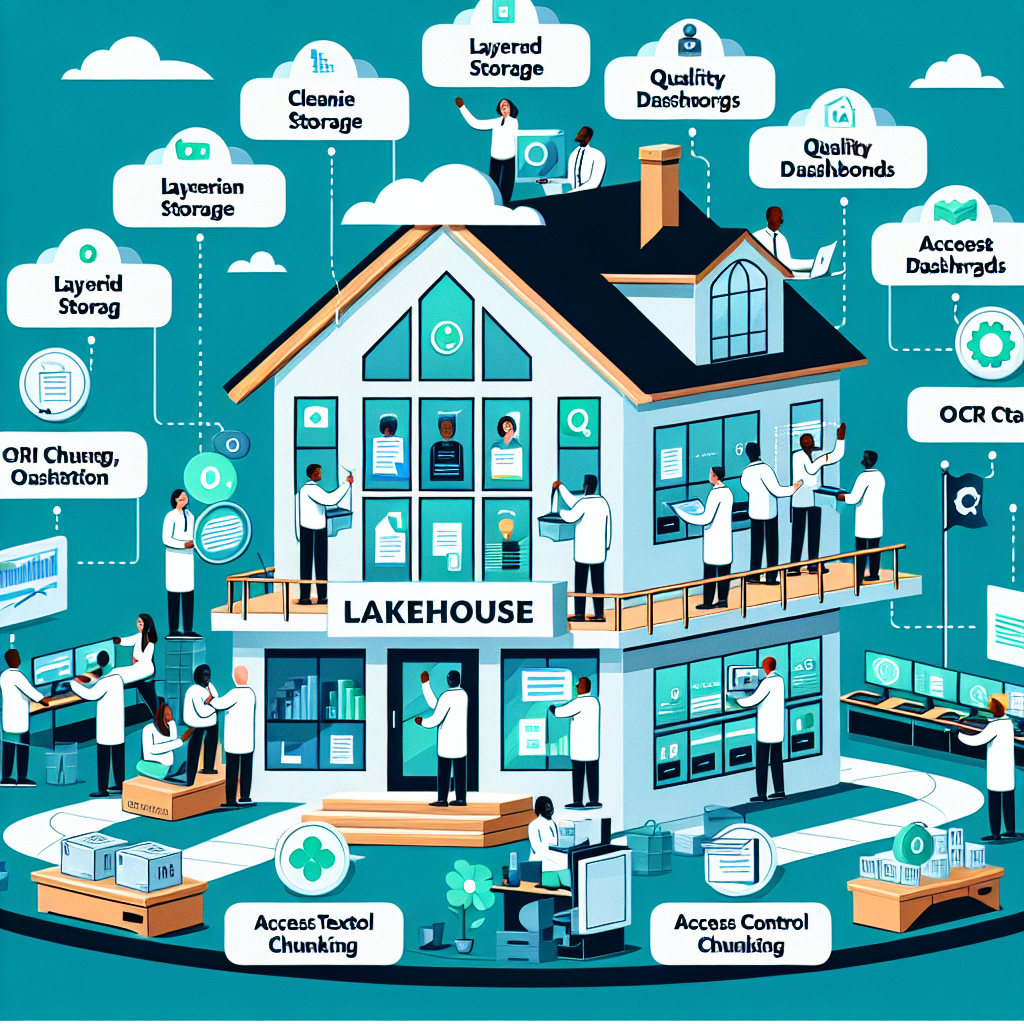
Instead of leaving your data in many small buckets all over the company, you should build one strong, central “home” for clean data. Many modern teams call this a “lakehouse”, but you can think of it as a large, organized store room with clear shelves and labels.
This central data home should:
- Keep raw data and cleaned data in separate areas.
- Use tables that can track history and changes safely.
- Have automated jobs that pull data in, clean it, and update it on schedule.
- Provide a simple way for analysts and AI models to read the same trusted version of the truth.
You can set this up in the cloud, on your own servers, or a mix of both, depending on your needs and local rules.
Once this foundation is in place, every new AI and reporting project becomes faster, cheaper, and less likely to break. To align this data foundation with your product and sales plans, TmatNetwork’s Enterprise Digital Marketing Services and Technology Digital Marketing Services can help you coordinate data work with your go-to-market strategy.
Step 7: Prepare Documents for AI Search (RAG-Ready Documents)
Many African companies have important knowledge locked in PDFs, scanned contracts, manuals, and policy documents. For AI tools (like chatbots that answer staff questions) to use this knowledge, these documents must be easy for machines to read and search.
The basic steps are:
- Use OCR (Optical Character Recognition) to turn scans into text.
- Split long documents into smaller, meaningful pieces (sections or paragraphs).
- Create “embeddings” (smart numerical fingerprints) so AI can quickly find the right pieces.
- Add simple labels to each piece (for example: document type, department, country, date, product, sensitivity).
With this setup, when an AI system answers a question, it can point back to the exact document and paragraph it used, making answers more trustworthy and easier to check.
How to Know if Your Data Is Healthy (KPIs & Health)
You cannot improve what you do not measure. To see if your data is truly “AI-ready”, watch a few simple health signs:
- Freshness: How old is the data? Are key tables updated on time (for example, today, not last week)?
- Completeness: How many important fields are empty or missing values?
- Stability: Are columns changing unexpectedly? Are value ranges shifting in strange ways?
- Usage: Which tables and dashboards do people actually use? Which ones can be cleaned up or removed?
Share this information openly inside the company so teams know when it is safe to rely on data and when they should wait or double-check.
Conclusion: A Strong Data Base Helps All Your AI Projects
Preparing company data for AI in Africa is not a one-time clean-up; it is an ongoing habit. When you have clear data owners, cleaned and standardised datasets, good access control, strong privacy, and a solid platform, every AI project becomes easier and more successful.
With a strong data foundation, you can move quickly from idea to working AI solution—whether it is predicting customer churn, spotting fraud, or powering a smart chatbot for your staff and customers.
If you want help designing and building this foundation, TmatNetwork’s AI Consulting practice can guide you from roadmap to implementation. When your data is ready and you want to turn insights into sales and growth, you can boost visibility and demand using Digital Marketing Services and SEO Services.
Comments are closed