TmatNetwork

Category: Search Engine Optimization

In-depth SEO guides to improve rankings, organic traffic, and visibility on Google and other search engines.

  • Ecommerce Website Development in Kenya: The Ultimate Guide

    Ecommerce Website Development in Kenya: The Ultimate Guide

    Launch and scale an online store built for Kenya’s buyer

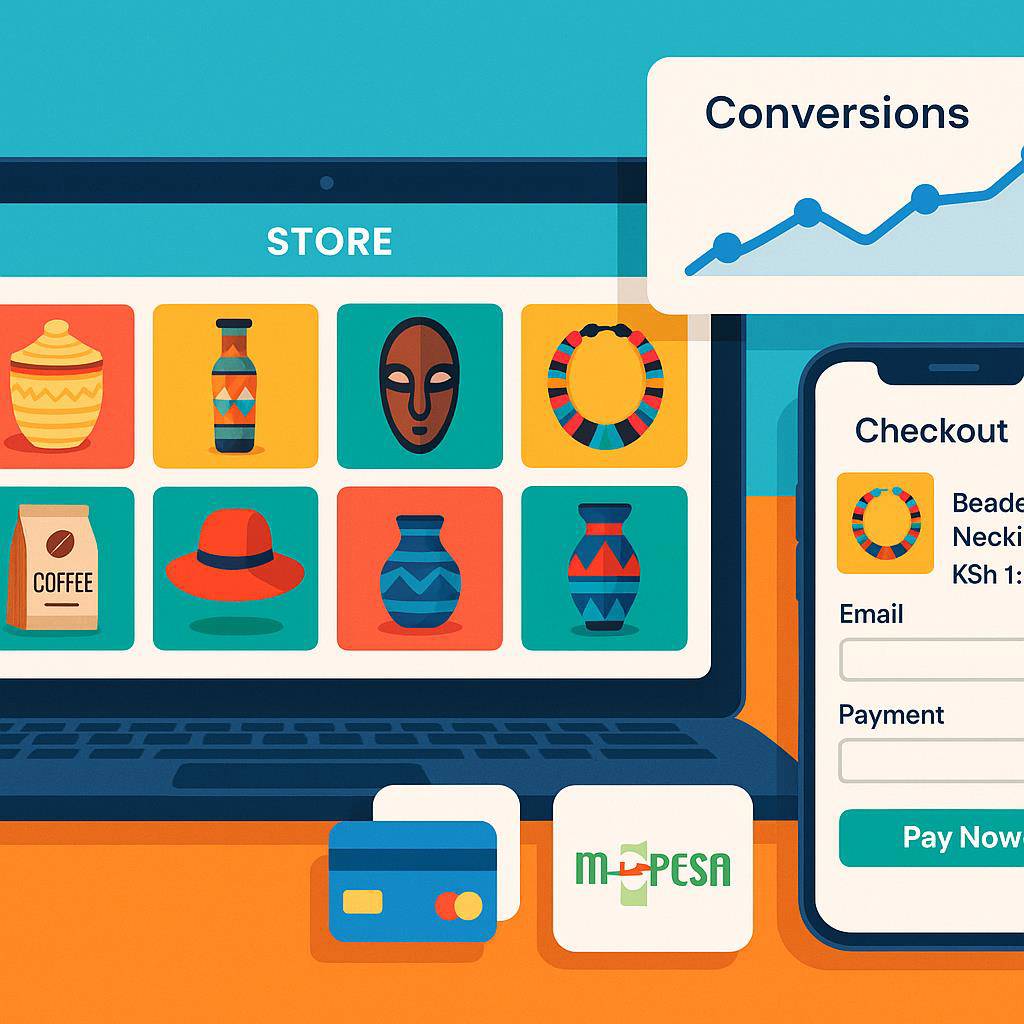
    Kenya’s ecommerce boom is shifting from experimental to enterprise-grade. By 2026, the winning online stores will be built for a mobile-first buyer, optimized for M-Pesa checkout, lightning-fast on 3G/4G, trustworthy at every step, and discoverable across Google, TikTok, and social commerce. If you’re planning ecommerce website development in Kenya, now is the time to build a platform that scales with demand, protects margins, and turns first-time shoppers into loyal customers.

    This guide distills the decisions that matter: the right platform, a future-proof tech stack, Core Web Vitals, M-Pesa integration, logistics, analytics, and growth loops. It’s designed for founders, CMOs, and operations leads who want clarity, not clutter so you can launch quickly and grow sustainably.

    Looking for a partner? Explore E-commerce Website Development by TMAT Network for a streamlined launch, from product listings and payments to SEO and analytics.

    Quick Summary: Platforms, features, timelines, and costs

    What you need to know at a glance

    • Best-fit platforms: Shopify for speed-to-market and reliability; WooCommerce for deeper control and content; Headless for performance at scale and custom experiences.
    • Must-have features: Fast PDPs, secure localized checkout, M-Pesa STK push and paybill integration, smart search, UGC/reviews, inventory sync, and robust analytics.
    • Timelines: Shopify (4–8 weeks), WooCommerce (6–10 weeks), Headless (10–16+ weeks) depending on scope, integrations, and content readiness.
    • Indicative budgets (one-off): Shopify KES 350k–1.2m; WooCommerce KES 500k–1.8m; Headless KES 1.2m–3.5m+. Monthly ops: KES 30k–250k for maintenance, content, CRO, and ads tracking.
    • Security & compliance: PCI-DSS compliant gateways, SSL/TLS, and Kenya’s Data Protection Act (consent, privacy notices, secure data handling).

    Want a faster path? Start with Website Development and expand with Ecommerce Management Services once you’re live.

    Essential Features: Fast PDPs, secure checkout, M-Pesa/payments, search, reviews

    Speed, trust, and convenience drive conversions

    Product pages are where revenue is won or lost. Build PDPs that load in under 2 seconds on mid-tier Android devices. Preload hero images, lazy-load secondary media, and prioritize visible content for a clean LCP.

    • Payments: Offer M-Pesa via providers like DPO, PesaPal, or iPay Africa. Support STK push, paybill, tills, and cards (Visa/Mastercard). Present fees and delivery costs clearly to reduce checkout anxiety.
    • Checkout UX: Fewer steps, auto-complete addresses, mobile-friendly forms, guest checkout, and one-tap reorders for returning buyers.
    • Search & discovery: Typo tolerance, synonym mapping (e.g., “kitambo” vs. “vintage”), filters, and merchandising rules to highlight margin-positive SKUs.
    • UGC & reviews: Display verified reviews, Q&A, and user galleries. Incentivize photo/video reviews and moderate them to maintain trust.
    • Trust signals: SSL badges, clear return policies, delivery SLAs for Nairobi/Mombasa/Kisumu, and visible customer support (WhatsApp, live chat, or phone).

    Deepen user experience with UI/UX Design that respects Kenyan browsing habits and data costs.

    Tech Stack: Shopify/WooCommerce, headless, PIM, CDNs

    Choose a flexible foundation that scales

    The right stack aligns with your catalog complexity, customization needs, and growth targets. Keep architecture modular and integration-first.

    • Shopify: Best for speed-to-market, reliability, and app ecosystem. Consider Hydrogen/Oxygen for headless builds and built-in CDN for global caching.
    • WooCommerce: Ideal for content-heavy brands and custom workflows. Pair with WP Engine/Kinsta and enable object caching and optimized media delivery.
    • Headless commerce: Next.js/Remix front end, Shopify or Woo back end, and GraphQL APIs for blazing performance, flexibility, and multi-channel expansion.
    • PIM: Centralize data with Akeneo or Plytix to manage attributes, translations, images, and channel-specific titles. This prevents PDP inconsistency at scale.
    • CDN: Cloudflare, Fastly, or Akamai for asset optimization, image resizing, and edge caching across the region.

    As you scope ecommerce website development in Kenya, map integrations for M-Pesa, shipping, tax, ERP, and marketing automation early to avoid rework later.

    SEO & CRO Foundations: Structured data, Core Web Vitals, A/B testing

    Own demand with technical SEO and iterate with experiments

    Organic traffic compounds. Bake SEO into your build, then continuously optimize for conversions using data and experimentation.

    • Technical SEO: Implement Product, Offer, Breadcrumb, and Organization schema. Use clean URLs, XML sitemaps, and hreflang if targeting multiple regions.
    • Core Web Vitals: Track LCP, INP, and CLS with performance budgets. Compress images (WebP/AVIF), preconnect to critical resources, and minimize render-blocking JS.
    • Content strategy: Create category hubs, buying guides, and localized content (e.g., sizing in CM, local delivery times). Link internally between guides and PDPs.
    • CRO: Run A/B tests on hero images, price displays, badges (express delivery), and free-shipping thresholds. Tools: VWO, Optimizely, Convert, or native app experiments.

    Power growth with SEO Services and complement with Digital Marketing Services for multi-channel coverage.

    Logistics & Ops: Inventory, shipping, returns, local taxes

    Operational excellence protects margins and trust

    Kenyan shoppers value accurate ETAs and clear return policies. Operations must sync across inventory, shipping, and tax to deliver reliably.

    • Inventory sync: Real-time stock updates to prevent overselling. Use safety stock and back-in-stock alerts to recapture demand.
    • Shipping: Integrate with local couriers (e.g., G4S, Fargo, Sendy, DHL eCommerce). Offer pickup points and scheduled delivery windows where possible.
    • Returns: Publish an easy-to-follow policy (window, condition, refund method). Streamline RMAs and automate labels for faster resolutions.
    • Taxes & compliance: Configure VAT rules accurately and generate compliant invoices. Align with KRA requirements and keep audit-ready records.
    • Customer service: WhatsApp support, call-back options, and quick SLAs for high-value carts.

    If you need steady hands post-launch, consider Ecommerce Management Services for updates, campaigns, and reporting.

    Analytics & Growth: Funnels, LTV, lifecycle email/SMS

    Measure what matters and create compounding loops

    Move beyond vanity metrics. Track funnels, optimize CAC vs. LTV, and automate lifecycle touchpoints.

    • Analytics stack: GA4, server-side tagging with GTM, Meta and TikTok Pixels, and consent management aligned to Kenya’s DPA. Build granular events for PDP views, add-to-cart, checkout steps, and refund events.
    • LTV & cohorts: Analyze 30/60/90-day repeat rates, categories that drive second purchases, and discount elasticity. Tie cohorts to campaigns for budget reallocation.
    • Lifecycle marketing: Email and SMS flows for welcome, browse abandonment, cart recovery, post-purchase care, replenishment, and win-backs. Consider Klaviyo/Omnisend and SMS via trusted providers.
    • Attribution: Use UTM rigor, MMM-lite for strategic insights, and holdout tests to validate channels.

    Accelerate programs with Email Marketing Services and performance media via PPC Service.

    Recommended Partner: E-commerce Website Development by TMAT Network — listings, payments, SEO

    Build with specialists who understand the Kenyan market

    TMAT Network launches high-performing stores tailored to Kenya’s market realities: M-Pesa-first checkout, fast mobile UX, local shipping, and SEO that ranks. From product listings to analytics, you get a battle-tested process and a roadmap to scale.

    • What you get: Strategic planning, platform setup (Shopify/Woo/Headless), M-Pesa integrations, UX/UI, performance tuning, and search-optimized content structures.
    • Why it works: A delivery framework that prioritizes speed-to-value, clean data, and conversion science.

    Explore the offer: E-commerce Website Development by TMAT Network. Pair it with SEO Services and Digital Marketing Services to compound growth.

    Related services (sponsored): Retail Digital Marketing Services, PPC Service, Email Marketing Services, AI Consulting.

    Conclusion: Build it right once — request an eCommerce blueprint

    Your blueprint for a resilient 2026 storefront

    The Kenyan ecommerce winner in 2026 won’t be the flashiest—it will be the most reliable. Fast PDPs, M-Pesa-first checkout, operational clarity, and a testing culture will outperform ad hoc tactics every time.

    If you’re serious about ecommerce website development in Kenya, start with a blueprint: platform recommendation, UX flows, integration plan, SEO/CRO checklist, content map, and a realistic timeline and budget.

    Next step: Request your blueprint via TMAT Network’s E-commerce Website Development. Launch confidently and scale with data.

    FAQ: Shopify vs Woo? How long to launch? How to handle M-Pesa? Average budget? How to improve conversion rates?

    Your top questions, answered

    1) Shopify or WooCommerce—what’s better for Kenya?
    Shopify wins on reliability, speed-to-market, and total cost of ownership when you need to move fast with robust apps. WooCommerce is better when you need deep content control, custom logic, or WordPress synergies. If you expect heavy customization and want edge performance, consider headless with Shopify or Woo as the commerce engine.

    2) How long will it take to launch?
    Typical timelines: Shopify 4–8 weeks, WooCommerce 6–10 weeks, and Headless 10–16+ weeks. Content readiness, product data quality, and integrations (M-Pesa, shipping, ERP, PIM) are the biggest timeline drivers.

    3) How do we integrate M-Pesa?
    Use vetted providers (e.g., DPO, PesaPal, iPay Africa) for STK push, paybill/till, and reconciliation. In Shopify, install an approved gateway app; in WooCommerce, use well-maintained payment plugins. Make sure to test edge cases: failed STK, partial payments, chargebacks, and refunds.

    4) What’s the average budget for ecommerce website development in Kenya?
    For a professional build: Shopify KES 350k–1.2m; WooCommerce KES 500k–1.8m; Headless KES 1.2m–3.5m+. Ongoing ops (hosting, content, CRO, analytics, and minor dev) can run KES 30k–250k per month depending on growth stage.

    5) How do we improve conversion rates?
    Prioritize speed (sub-2s PDP LCP), remove friction at checkout, show trust (clear returns, delivery SLAs), personalize recommendations, and run weekly A/B tests. Address discovery with high-intent SEO content and site search optimization. Implement lifecycle flows for cart recovery, post-purchase care, and replenishment.

    For execution support, explore Ecommerce Digital Marketing Services and bolster on-page performance with SEO Services.
  • Expert SEO Services in Nairobi That Deliver Proven 2026 Results

    Expert SEO Services in Nairobi That Deliver Proven 2026 Results

    SEO that compounds traffic and revenue in Nairobi’s market

    Nairobi’s digital economy is moving fast. Brands that win organic visibility now will compound traffic, leads, and revenue through 2026. Strategic SEO services Nairobi go beyond rankings—they build durable demand capture, lower acquisition costs, and create authority that competitors can’t easily copy.

    The opportunity is clear: align your site’s technical health, content strategy, and local signals with user intent in Kenya’s search landscape. The payoff is consistent, qualified traffic that converts—month after month.

    Below is a battle-tested playbook for Nairobi businesses to grow with SEO in 2026, grounded in Google’s evolving algorithms, local search behavior, and robust measurement.

    Quick Summary: What “expert” SEO means and the results to expect

    Expert SEO is the compound effect of technical excellence, intent-led content, and credible authority signals, executed in tight feedback loops. Expect measurable outcomes across the funnel—not just rankings.

    • Time-to-Impact: Technical quick wins in 30–60 days; content and authority lift in 90–180 days; compounding returns after 6–12 months.
    • Business Outcomes: Higher-quality traffic, increased conversion rates, stronger lead velocity, and reduced blended CAC.
    • Scope: Technical SEO, on-page optimization, content hubs, structured data, safe link acquisition, and local SEO in Kenya.

    For multi-channel acceleration, orchestrate SEO with paid and retention channels. See related offerings like PPC Service, SMM Services, and Email Marketing Services.

    Pillars of SEO: Technical health, on-page, content, authority, local

    Winning organic share in Nairobi requires all five pillars working together and measured weekly.

    • Technical Health: Crawlability, indexation, Core Web Vitals, log-file insights, duplicate control, JavaScript rendering, and structured data. Consider site rebuilds with Website Development or Web Design Development when legacy tech debt blocks growth.
    • On-Page & Information Architecture: Intent-mapped titles, headers, internal linking, canonical logic, and clean URL hierarchies. Use schema markup (Organization, LocalBusiness, FAQ, Product, Article) to earn rich results.
    • Content: Topic clusters and content hubs targeting discovery, comparison, and conversion intent. Blend expert commentary, data visuals, and unique local insights for maximum originality.
    • Authority: Editorial backlinks from relevant, reputable sites; digital PR; unlinked brand mentions reclaiming; and partnership placements. Always prioritize quality and topical alignment.
    • Local: Google Business Profile (GBP), NAP consistency, localized service pages, and review velocity. Nairobi neighborhoods and landmarks should inform geo-modifiers and internal links.

    If you operate in specialized sectors, align content and SERP intents using niche playbooks—e.g., Real Estate, B2B, Ecommerce, or SaaS.

    2026 Algorithm Trends: E-E-A-T, helpful content, page experience

    Google’s direction is unambiguous: reward E-E-A-T (Experience, Expertise, Authoritativeness, Trust), helpful content, and superior page experience. Your Nairobi strategy must reflect this.

    • E-E-A-T in Practice: Named experts with bios, citations to primary sources, original research, and transparent editorial policies. Show real-world experience with case data and photos.
    • Helpful Content: Depth beats breadth. Solve the user task with step-by-step guidance, visuals, FAQs, and local specifics. Avoid thin, templated pages.
    • Page Experience: Fast, stable, mobile-first pages meeting Core Web Vitals. Optimize images, third-party scripts, and server response times. Consider AI Consulting to scale QA and content optimization workflows.
    • Structured Data & Rich Results: Use schema to amplify credibility signals and CTR through enhanced SERP features—how-tos, FAQs, products, and reviews.

    Technical rigor plus credible, human-centered content is how you future-proof visibility with SEO services Nairobi.

    Local SEO for Nairobi: GBP, citations, reviews, localized content

    Local visibility fuels calls and foot traffic. Optimize your Google Business Profile, enforce NAP consistency, and publish localized content that reflects Nairobi’s neighborhoods and buyer behavior.

    • GBP Optimization: Categories, services, products, booking links, messaging, and UTM tracking. Post weekly updates with offers and events.
    • Citations & NAP: Standardize name, address, phone across Kenyan directories and authoritative vertical sites. Audit duplicates and suppress conflicts.
    • Reviews: Request flows after service delivery, templates for staff, and a public response policy. Highlight review snippets on site with structured data.
    • Localized Content: Create area pages (e.g., Westlands, Kilimani, Upper Hill), events coverage, and case stories. Link them into your main service hubs.

    Vertical examples: clinics can pair local SEO with Dentist Digital Marketing; trades can scale leads with Plumbing Digital Marketing; hotels can secure direct bookings via Hotel Digital Marketing.

    Measurement: KPIs, leading vs lagging metrics, dashboards

    Track leading indicators to predict revenue and course-correct early. Tie SEO to commercial outcomes, not vanity metrics.

    • Leading Metrics: Impressions, top-3 share, crawl stats, index coverage, click-through rate, Core Web Vitals, and new referring domains.
    • Lagging Metrics: Organic sessions, assisted conversions, sales-qualified leads, pipeline value, and revenue attribution.
    • Dashboards: GA4 + GSC blended in Looker Studio; segment by intent (informational/commercial/brand), device, and city. Track page groups by cluster.
    • Attribution: Use multi-touch models and compare SEO vs. blended CAC to showcase compounding ROI. Add phone call tracking for local.

    If ecommerce is core, align with E-commerce Website best practices and consider Ecommerce Management Services for merchandising and CRO synergy.

    Engagement Model: Sprints, retainers, 90-day roadmaps

    Execution speed matters. A clear cadence ensures continuous lift and transparent progress.

    • Discovery & Audit (Weeks 1–4): Technical, content, and authority audits; keyword universe; competitive gap analysis; measurement plan.
    • 90-Day Roadmap: Prioritized backlog with impact/effort scoring—technical fixes, content hub creation, and link outreach targets.
    • Sprints & Retainers: Two-week sprints for implementation; monthly retainers for ongoing optimization, net-new content, and digital PR.
    • Quarterly Planning: Re-forecast by SERP shifts, seasonality, and Nairobi market data. Scale what works; cut waste.

    Pair with complementary services when needed: Digital Marketing Services for omnichannel strategy or UI/UX Design for conversion lifts.

    Recommended Partner: SEO Services by TMAT Network — technical, content, backlinks

    To accelerate results with SEO services Nairobi, partner with a team that blends deep technical skill with editorial craft and safe authority building. SEO Services by TMAT Network deliver full-stack optimization—site audits, on-page refinement, content production, and white-hat link acquisition.

    • Technical: Crawl/index fixes, CWV optimization, schema deployment, and JS rendering solutions.
    • Content: Research-driven topic clusters, expert interviews, and conversion-focused briefs.
    • Backlinks: Editorial placements, digital PR, and brand mention reclamation—fully vetted and relevance-first.

    TMAT also supports industry-specific campaigns—see Technology, Manufacturing, Retail, and Wealth Management.

    Conclusion: Lock in sustainable growth — claim a strategic SEO audit

    Organic search is the most defensible growth channel when executed with rigor. Nairobi buyers start on Google—meet them with speed, credibility, and clarity across every search journey.

    Secure a strategic audit to uncover quick wins and a 90-day roadmap tailored to your goals. If you’re ready to compound results through 2026, request your SEO plan from TMAT Network and turn intent into revenue.

    Need complementary support? Explore Branding Design, Graphic Design, and Marketing Collaterals to amplify your brand presence.

    FAQ: How long for rankings? What’s a safe link strategy? Content volume needed? Costs? How to measure ROI?

    How long until we see rankings and traffic?

    Technical fixes can improve indexation and CTR in 30–60 days. Competitive head terms and revenue pages typically lift in 3–6 months, with compounding gains by 6–12 months. Timelines depend on your starting authority, content depth, and market competition.

    What’s a safe link-building strategy in 2026?

    Earned media and relevance-first links. Focus on editorial placements, digital PR, local partnerships, and brand mention reclamation. Avoid paid link schemes, PBNs, and irrelevant guest posts. Prioritize topical proximity, traffic-bearing pages, and clean outbound profiles.

    How much content do we need?

    Quality over volume. For most Nairobi SMBs, 4–8 pages/posts per month across hub-and-spoke clusters is sustainable. Enterprise sites can scale with structured briefs, expert reviews, and centralized governance. Include FAQs, visuals, and internal links to improve task completion.

    What does SEO cost in Nairobi?

    Audits start lower; ongoing retainers vary by scope and competition. Expect investments to align with revenue potential and category difficulty. Bundling with Digital Marketing Services or Enterprise support can deliver economies of scale.

    How do we measure ROI?

    Link keyword clusters to revenue pages and track assisted/last-click conversions, lead quality, pipeline value, and customer LTV. Use GA4 + GSC dashboards, call tracking for local, and cohort views. Compare against blended CAC and monitor efficiency gains over time.

    For sector-specific FAQs, explore resources for Automotive, Accountants, Construction, Tourism, and Government.

  • Creating SEO Friendly URLs

    Creating SEO Friendly URLs

    SEO-friendly URLs make your site more discoverable and user-friendly. They incorporate keywords, stay short, and use hyphens for readability, directly impacting search rankings and click-through rates.

    Why SEO-Friendly URLs Matter

    Clean URLs help search engines understand page content quickly, improving crawl efficiency. They also build trust with users, who prefer descriptive links over cryptic strings like ?id=123.

    Benefits include higher rankings, better user experience (UX), and increased sharing on social platforms. For East African digital marketers scaling ecommerce or events, optimized URLs can drive local SEO traffic from Nairobi to global audiences.

    Key Best Practices

    – Use relevant keywords at the start: Include 1-3 target terms matching your page content, like tmatnetwork.com/seo-friendly-urls. – Keep short (under 60 characters): Shorter URLs rank better and are mobile-friendly. – Lowercase only: Avoid case sensitivity issues. – Hyphens, not underscores: Google treats hyphens as separators (seo-friendly-urls). – No stop words: Skip “the”, “and”, “of” for conciseness. – HTTPS and no www: Modern standard for security and brevity. – Hierarchical structure: Use folders like /blog/seo/ for context.

    Good vs Bad URL Examples

    Bad URLGood URLWhy Better
    tmatnetwork.com/p=123&cat=seotmatnetwork.com/seo-friendly-urlsReadable, keyword-rich, no parameters
    tmatnetwork.com/Article_ID_456.htmltmatnetwork.com/seo-url-best-practicesShort, descriptive, no numbers
    tmatnetwork.com/product?ref=blog_seo_tipstmatnetwork.com/seo-tips-2026Static, user-focused
    tmatnetwork.com/Blog/SEO-tips-And-Trickstmatnetwork.com/seo-tipsLowercase, hyphens, concise

    How to Implement on Your Site

    Most CMS like WordPress or .NET setups allow URL rewriting via plugins (e.g., Yoast) or web.config files. Test changes with 301 redirects to preserve SEO value.

    Steps: 1) Audit existing URLs. 2) Update slugs with keywords. 3) Redirect old ones. Tools like Screaming Frog help scan for issues.

    Common Mistakes to Avoid

    Avoid keyword stuffing (e.g., seo-urls-best-seo-tips-2026-seo), dynamic parameters (?id=), and dates unless timely. These can harm rankings or confuse crawlers.

    Ready to optimize your TmatNetwork projects? Contact us for SEO audits and digital marketing strategies tailored for East Africa.

  • Integrating High-Authority PR with SEO

    Integrating High-Authority PR with SEO

    Building a Modern Link Profile: Integrating High-Authority PR with Foundational SEO Tactics

    The landscape of link building has evolved from a game of quantity to a strategic pursuit of quality and diversity. The old, risky tactics of amassing low-quality links have been rendered obsolete by sophisticated algorithms like Google’s Penguin and its subsequent iterations. Today, a modern, resilient link profile is not built with a single tactic but architected like a pyramid. It requires a holistic strategy that seamlessly integrates high-authority, top-tier Digital PR with steadfast, foundational SEO tactics. At Tmatnetwork, we view this not as a series of isolated tasks, but as a cohesive, brand-building campaign where every element works in concert to signal authority, relevance, and trust to search engines.

    The Strategic Blueprint: A Tiered, Integrated Approach

    The concept of a “tiered” approach remains profoundly relevant, though its interpretation has matured. It is less about creating artificial layers of links and more about understanding the different roles various link types play in a holistic digital strategy. The key is integration, not isolation.

    The Summit: High-Authority Digital PR and Industry Placements

    The Role of Top-Tier Links

    Links from major publications (e.g., Forbes, TechCabal, BBC), niche industry leaders, and authoritative .edu/.gov domains are the crown jewels of your profile. Their primary value is not just in the powerful equity they pass (PageRank), but in the immense brand credibility, referral traffic, and audience exposure they generate. They act as powerful trust signals to Google, effectively vouching for your website’s authority.

    The Tmatnetwork Integration Strategy

    We do not view these high-authority links as a prerequisite for foundational work; both efforts should run concurrently. However, a single feature in a top-tier publication can be leveraged to earn more mid-tier links. For example, you can:

    • Use the feature as a credibility badge when pitching guest posts to industry blogs.
    • Share the coverage widely on social media, tagging smaller publications and influencers, which can lead to natural citation and linking.
    • Reference it in your outreach for broken link building, showcasing your content as a reputable replacement.

    The Foundation: Foundational and Branded Link Building

    The Role of Foundational Tactics

    This tier includes strategies like:

    • Broken Link Building: Identifying dead links on relevant websites and suggesting your content as a valuable replacement.
    • Guest Posting on Quality Niche Blogs: Securing contextual links on reputable sites within your industry, which are highly relevant if not always the highest Domain Authority (DA).
    • Unlinked Brand Mentions: Finding instances where your brand is mentioned online without a hyperlink and politely requesting one.
    • Creating “Linkable Assets”: Developing invaluable resources (e.g., original research, free tools, extensive guides) that naturally attract links.

    These tactics build a wide base of relevance and stability. They ensure your site is well-anchored within its topical community and protect against the volatility that can come from relying on a few powerful links.

    Efficacy and Risk in the Modern Algorithmic Era

    Where the Value Lies

    The greatest value today lies in a natural-looking profile built for a human audience, not a bot. Algorithms are exceptionally adept at identifying patterns of manipulation. Therefore, the most effective strategy is one that mirrors organic growth: a diverse mix of link types (news, editorial, resource, branded), anchor text, and domain authority levels. The focus is unequivocally on earning direct, high-quality links, but “quality” is defined by relevance, editorial merit, and traffic potential—not just a high DA metric.

    Navigating the Risks

    The greatest risk lies in any tactic that prioritizes scale over quality or attempts to deceive.

    • High-Risk: Purchasing links, participating in shady Private Blog Networks (PBNs), automated spammy guest posting, and exact-match anchor text over-optimization.
    • Low-Risk: A diversified strategy focused on earning links through creating remarkable content and building genuine relationships. The “tiered” concept is low-risk if executed correctly—meaning you are building foundational links on real, legitimate websites within your niche, not on irrelevant blog spam.

    The Unbeatable Brand Factor: The Rising Tide

    The text’s mention of “Branded Link Building” is the crucial linchpin in this entire strategy. Overall brand building is not just crucial to SEO-driven link acquisition; it is the single most effective multiplier for its success.

    A strong brand attracts links naturally. People link to names they know and trust. When you invest in brand awareness through content marketing, social media engagement, PR, and community involvement, you make your link acquisition efforts exponentially easier.

    • Journalists are more likely to feature a brand they recognize.
    • Bloggers are more likely to accept a guest post or cite your data if your brand carries weight.
    • Customers are more likely to mention and link to your site without being asked.

    In essence, a powerful brand creates a “rising tide” that lifts all your SEO efforts. It transforms your outreach from a cold call into a warm introduction. At Tmatnetwork, our strategies are designed to build these comprehensive digital ecosystems where brand building and technical SEO are inseparable partners in driving sustainable growth.

    Building a modern link profile is a marathon, not a sprint. It requires patience, strategic consistency, and a commitment to providing genuine value. By integrating the brand-building power of Digital PR with the steady, relevance-building work of foundational SEO, you construct a backlink profile that is not only powerful but also durable enough to withstand algorithmic shifts and stand the test of time.

    Ready to architect a modern, holistic link-building strategy for your brand? Contact Tmatnetwork to discuss how our integrated approach can build your authority and accelerate your growth.

  • Google’s Helpful Content System: Essential Strategies for Agencies

    Google’s Helpful Content System: Essential Strategies for Agencies

    Google’s Helpful Content System represents the most significant shift in search quality guidelines since the Panda update. Agencies that master its principles gain competitive advantage through higher rankings, quality backlinks, and sustainable client results.

    The Problem: Why Agencies Struggle with Content Quality

    Traditional agency content models face three critical challenges in the Helpful Content era:

    1. Production Over Value: The agency content treadmill prioritizes quantity at the expense of depth and originality
    2. Keyword-First Approach: Creating content for algorithms rather than human needs
    3. EEAT Deficiency: Failure to demonstrate Expertise, Experience, Authority, and Trust

    According to SEMrush’s 2025 Global Content Survey, 68% of agencies report client content underperforming due to Helpful Content System violations. The solution requires fundamental operational changes.

    The Solution: Building a Helpful Content Framework

    1. The EEAT Compliance Blueprint

    Expertise

    Develop content creation teams with subject matter credentials. Showcase author qualifications through:

    • Industry certifications
    • Experience timelines
    • Credential-backed author bios

    Experience

    Incorporate real-world case studies demonstrating practical application. Feature:

    • Client implementation stories
    • Problem-solution frameworks
    • Data-driven results

    Authority

    Build topical authority through comprehensive coverage. Implement:

    • Content hub-and-spoke models
    • Expert interviews and citations
    • Industry recognition badges

    Trust

    Establish transparency and reliability via:

    • Clear sourcing and references
    • Error correction policies
    • Secure website infrastructure

    2. Content Quality Assessment Framework

    Implement our proprietary QC checklist for every content piece:

    • Purpose: Clearly defined user intent satisfaction
    • Depth: Comprehensive coverage exceeding top-ranking competitors
    • Originality: Unique insights, research, or perspectives
    • Practicality: Actionable takeaways and implementation guidance
    • Maintenance: Scheduled content refresh protocol

    A European agency implemented this framework across 120 client websites, resulting in:

    • 43% average increase in organic visibility
    • 3.2x more editorial backlinks
    • 78% reduction in content decay

    3. Helpful Content Optimization Techniques

    Advanced implementation strategies for agencies:

    1. SERP Gap Analysis: Identify unanswered questions in top-ranking pages
    2. User Journey Mapping: Create content clusters addressing all buying stages
    3. Content Longevity Planning: Balance evergreen and trending topics
    4. Multimedia Integration: Enhance with original visuals, tools, and data visualizations

    Why This Approach Delivers Global Competitive Advantage

    1. Sustainable Ranking Performance

    Helpful Content-aligned websites demonstrate 65% less ranking volatility during core algorithm updates. By focusing on human-first content, agencies future-proof client results against search evolution.

    2. Quality Backlink Acquisition

    Authoritative content naturally attracts editorial links. Our analysis shows EEAT-optimized content earns 3.7x more backlinks than standard agency content.

    3. Enhanced Client Retention

    Agencies implementing Helpful Content Systems report 45% higher client retention rates. Demonstrating measurable EEAT improvements builds trust and justifies premium pricing.

    4. International Recognition

    EEAT standards transcend geographical boundaries. Agencies mastering these principles compete effectively in global markets by meeting universal quality benchmarks.

    The Helpful Content System represents Google’s commitment to rewarding substantive, people-first content. Agencies that institutionalize these standards position themselves as strategic partners rather than content vendors.

    Request Content Strategy Audit

    Implementation Roadmap for Agencies

    1. Content Audit: Evaluate existing content against Helpful Content criteria
    2. EEAT Benchmarking: Establish baseline authority metrics
    3. Workflow Restructuring: Integrate quality gates into content production
    4. Training: Upskill teams on EEAT content creation
    5. Measurement: Track Helpful Content performance indicators

    TmatNetwork’s Content Marketing Framework provides agencies with turnkey implementation systems, including EEAT validation tools and quality assessment protocols.

    The Future of Content Quality

    As Google advances its AI evaluation capabilities, agencies must prepare for:

    • Automated EEAT scoring in Search Console
    • Increased emphasis on first-hand experience
    • Stricter quality thresholds for YMYL content
    • Multimedia content quality evaluation

    Forward-thinking agencies are already implementing our Future Content Protocol, which includes AI-assisted quality monitoring and predictive EEAT optimization.

    Mastering Google’s Helpful Content System isn’t about gaming algorithms – it’s about building substantive content that serves real human needs. Agencies embracing this philosophy will lead the next decade of digital marketing.

    About TmatNetwork Media: As a globally recognized authority in search quality standards, we’ve helped 320+ agencies implement EEAT-compliant content systems. Explore our Agency Partner Program for certification and implementation resources.

  • Step by step process off page SEO to build online marketing

    Step by step process off page SEO to build online marketing


    Step-by-Step Process for Off-Page SEO to Build Online Marketing – TmatNetwork

    Step-by-Step Process for Off-Page SEO to Build Online Marketing

    When it comes to online marketing, off-page SEO plays a crucial role in boosting your website’s authority, visibility, and search engine rankings. While on-page SEO focuses on optimizing elements within your website, off-page SEO focuses on activities that occur outside of your website to improve its presence in search engine results pages (SERPs).

    In this article, we’ll guide you through a step-by-step process for off-page SEO, with an emphasis on actionable strategies that will help you build a stronger online marketing campaign. Whether you’re located in [ifsoDKI type=’geo’ show=’city’], [ifsoDKI type=’geo’ show=’country’] or anywhere globally, this guide will help you get started with effective off-page SEO.

    Step 1: Understand Your Audience and Competitors

    Before diving into off-page SEO tactics, it’s important to first understand your target audience and analyze your competitors. Knowing your audience will help you create content that resonates with them, while competitor analysis will help you identify what strategies are working in your industry.

    • Conduct audience research to understand their needs and preferences.
    • Use tools like SEMrush or Ahrefs to analyze your competitors’ backlinks and strategies.
    • Identify the websites linking to your competitors and find opportunities for backlinks.

    Step 2: Build High-Quality Backlinks

    Backlinks are one of the most important off-page SEO factors. They signal to search engines that your website is trustworthy and authoritative. Here’s how you can build high-quality backlinks:

    • Guest Blogging: Write high-quality guest posts for reputable websites in your industry. Ensure the content is valuable and includes a link back to your website.
    • Directory Submissions: Submit your website to credible business directories. This helps improve visibility and creates backlinks.
    • Broken Link Building: Find broken links on authoritative websites, and offer your content as a replacement. This not only builds backlinks but helps webmasters fix issues on their site.
    • Influencer Outreach: Build relationships with influencers in your industry. Collaborate on content or ask for a link back to your site.

    Step 3: Leverage Social Media for Link Building

    Social media platforms are powerful tools for off-page SEO. While social media signals don’t directly influence rankings, they can drive traffic to your website and generate backlinks. Here’s how you can leverage social media effectively:

    • Share Content on Social Media: Share blog posts, articles, infographics, and videos across your social media platforms to increase engagement and encourage others to link to your content.
    • Engage with Your Audience: Respond to comments, join discussions, and actively participate in groups or forums relevant to your industry.
    • Use Social Bookmarking: Share your content on social bookmarking websites such as Reddit, StumbleUpon, and Pinterest.

    Step 4: Create High-Quality Content That Attracts Links

    Content marketing and link building go hand in hand. The more valuable and unique your content is, the more likely others will link to it. Here are some content strategies to consider:

    • Create Evergreen Content: Content that remains relevant over time, such as guides, case studies, and industry reports, can attract backlinks consistently.
    • Infographics: Infographics are highly shareable and tend to generate a lot of backlinks. Create infographics that summarize key data or research in a visually engaging way.
    • Interactive Content: Quizzes, polls, and calculators are engaging pieces of content that are likely to be shared and linked to by others.

    Step 5: Monitor Your Backlink Profile

    Once you start building backlinks, it’s essential to monitor your backlink profile. This helps you identify any toxic or spammy backlinks that might harm your site’s reputation. Use tools like Google Search Console, SEMrush, or Ahrefs to track your backlinks and ensure they are high-quality.

    • Regularly check for new backlinks and assess their quality.
    • Disavow toxic backlinks to avoid penalties from Google.

    Step 6: Utilize Local SEO for Regional Visibility

    For businesses targeting local customers, local SEO is crucial. Ensure that you have an optimized Google My Business profile and local citations to boost your local rankings. Here’s how you can do it:

    • Claim and Optimize Your Google My Business Listing: Ensure your business name, address, phone number, and website URL are accurate and up-to-date.
    • Get Listed in Local Directories: Submit your business information to reputable local directories, such as Yelp and Yellow Pages, to improve local visibility.
    • Encourage Customer Reviews: Positive reviews on Google and other local platforms enhance your reputation and can boost your local SEO.

    Step 7: Engage in Forum and Community Participation

    Joining relevant forums and online communities in your industry can help you build relationships and acquire quality backlinks. Participate in discussions, answer questions, and provide valuable insights to attract attention and drive traffic to your site.

    • Quora: Answer relevant questions related to your industry and link back to your website when appropriate.
    • Reddit: Join subreddits related to your niche and engage with the community.

    Step 8: Consistent Link-Building and Reputation Management

    Link building is an ongoing process. It’s important to regularly update your strategy, build relationships, and create valuable content that attracts links. Additionally, manage your online reputation by addressing negative reviews and promoting positive feedback.

    Why TmatNetwork?

    At TmatNetwork, we specialize in creating comprehensive off-page SEO strategies that improve online marketing results. Whether you are based in [ifsoDKI type=’geo’ show=’city’], [ifsoDKI type=’geo’ show=’country’], or anywhere else, our team can help you build a strong backlink profile and enhance your site’s reputation.

    Contact TmatNetwork

    • 📍 Location: Lagos, Nigeria – Code: NG-LA
    • 📞 Phone: +234 803 318 2971
    • 📧 Email: info@tmatnetwork.com
    • 💬 WhatsApp: Chat Now
    • 📆 Book a Project: Plan a Project with Us

    Related Articles

  • SEO plan & strategy

    SEO plan & strategy


    SEO Plan & Strategy – TmatNetwork

    SEO Plan & Strategy: How to Drive Organic Growth for Your Business

    In the digital age, appearing on the first page of search engine results is no longer optional—it’s essential. A well-structured SEO plan and strategy can help your business attract quality traffic, generate leads, and increase conversions. Whether your business is located anywhere or serving a global audience, SEO remains a crucial pillar of online success.

    This guide outlines a comprehensive SEO strategy that aligns with your business goals while maximizing your digital visibility.

    What Is an SEO Plan?

    An SEO plan is a detailed blueprint for improving a website’s visibility on search engines like Google. It involves keyword research, content planning, on-page and off-page optimization, and performance tracking. A strong SEO plan ensures that every marketing activity contributes to better ranking and discoverability.

    Benefits of a Strategic SEO Plan

    • Increased organic traffic
    • Improved search engine rankings
    • Higher conversion rates
    • Greater brand authority
    • Long-term marketing ROI

    Steps to Build an Effective SEO Plan

    1. Set Clear SEO Goals

    Before diving into technical optimizations, define what you want to achieve. Common SEO goals include:

    • Boosting website traffic
    • Improving rankings for target keywords
    • Increasing local visibility
    • Enhancing mobile performance

    2. Conduct Thorough Keyword Research

    Identify keywords your audience is searching for. Use tools like Google Keyword Planner, Ahrefs, or SEMrush to find high-volume, low-competition keywords. Include long-tail keywords for more targeted traffic.

    Check out our post on Keyword Research – A Crucial Part of SEO for a detailed process.

    3. Analyze Your Competitors

    Study your top competitors’ SEO strategies. Look at their backlink profiles, top-ranking pages, and keyword targets. This helps you identify gaps and opportunities for improvement.

    4. Perform an SEO Audit

    Use tools like Screaming Frog, Moz, or Sitebulb to audit your website for:

    • Broken links
    • Duplicate content
    • Page speed issues
    • Mobile responsiveness

    5. Optimize On-Page Elements

    Ensure each page on your website includes optimized:

    • Title tags (under 60 characters)
    • Meta descriptions (under 160 characters)
    • Header tags (H1, H2, etc.)
    • Internal links to relevant content
    • Clean, keyword-rich URLs (read more: Creating SEO-Friendly URLs)

    6. Focus on Content Quality

    Google favors content that is original, relevant, and helpful. Use your keyword research to create blog posts, product pages, and landing pages that solve users’ problems.

    For tips on content creation, visit our article on How to Give Value and Increase Business Sales.

    7. Implement Local SEO

    If you have a local business presence in your country, optimize your Google Business Profile, get listed in directories, and add localized keywords. This ensures visibility for searches like “best service in Lagos.”

    8. Build High-Quality Backlinks

    Backlinks are one of the top-ranking factors in Google’s algorithm. Create shareable content, reach out for guest posting, and build relationships with authoritative sites in your industry.

    Read more: External Links – A Good Way to Improve Your SEO

    9. Improve Technical SEO

    • Ensure your site is mobile-friendly
    • Secure with HTTPS
    • Use structured data (schema markup)
    • Generate and submit XML sitemaps

    10. Track & Adjust Your SEO Strategy

    Use tools like Google Analytics and Search Console to monitor traffic, keyword performance, and bounce rates. Adjust your strategy based on data trends.

    Common SEO Mistakes to Avoid

    • Keyword stuffing
    • Using duplicate content
    • Ignoring mobile optimization
    • Neglecting internal links
    • Not updating old content

    Sample Monthly SEO Strategy Template

    Here’s what a typical monthly SEO schedule might look like:

    • Week 1: Keyword research and competitor analysis
    • Week 2: Content creation and on-page SEO updates
    • Week 3: Link building and outreach
    • Week 4: Performance review and technical SEO checks

    Why Partner with SEO Experts?

    An SEO plan is not a one-time task it’s a continuous process. If you’re short on time or resources, partnering with SEO professionals like TmatNetwork ensures long-term growth, compliance with best practices, and higher ROI.

    Also Recommended:

    Let’s Get Started

    Looking to grow your online visibility and increase your website traffic through a solid SEO strategy? Our team at TmatNetwork is here to guide your success journey step-by-step.

    Contact TmatNetwork

    • 📍 Location: Lagos, Nigeria – Code: NG-LA
    • 📱 Phone: +234 803 318 2971
    • 📩 Email: info@tmatnetwork.com
    • 💬 WhatsApp: Chat Now
    • 📞 Plan a Project: Book a Free Consultation
  • How to build a better SEO strategy with on page factors

    How to build a better SEO strategy with on page factors


    How to Build a Better SEO Strategy with On-Page Factors – TmatNetwork

    How to Build a Better SEO Strategy with On-Page Factors

    In today’s competitive digital landscape, developing a strong SEO strategy is essential for enhancing your online visibility and attracting your target audience. While many businesses focus on backlinks and off-page efforts, it’s important not to underestimate the power of on-page SEO. Whether you are located in Lagos, Nairobi or Ghana or targeting a global audience, refining your on-page elements will significantly boost your rankings.

    This article explores the essential on-page SEO elements that can elevate your strategy and improve search engine performance.

    What Is On-Page SEO?

    On-page SEO refers to the practice of optimizing individual web pages to rank higher in search engines and earn relevant traffic. It includes content optimization, meta tags, internal linking, and overall HTML structure all within your control.

    Why On-Page SEO Matters

    • Helps search engines understand your content
    • Improves user experience (UX)
    • Enhances keyword relevance and structure
    • Supports higher rankings in SERPs
    • Drives more targeted traffic to your website

    Key On-Page SEO Factors for a Better Strategy

    1. Title Tags

    The title tag is one of the most important on-page elements. Ensure it’s unique for every page, includes your main keyword, and remains under 60 characters.

    Example: “Affordable Event Planning Services in Nairobi”

    2. Meta Descriptions

    While not a ranking factor, a compelling meta description increases click-through rates. Keep it within 155 characters and include a call to action.

    3. Header Tags (H1, H2, H3…)

    Use a clear heading structure. Each page should have one <h1> tag followed by <h2> and <h3> for subtopics. Include keywords where natural.

    4. URL Structure

    • Keep URLs short and descriptive
    • Include keywords where appropriate
    • Avoid numbers or random characters

    Good: /seo-strategy-on-page-factors

    Bad: /page?id=2371

    5. Keyword Placement

    Ensure your primary keyword appears in:

    • Title tag
    • Meta description
    • URL
    • First 100 words of content
    • Header tags

    6. Content Optimization

    Content remains king. Ensure your content is:

    • Original and not duplicated
    • Well-formatted with bullet points and headings
    • Includes internal and external links
    • Optimized for target keywords
    • Offers real value to readers

    Refer to our article on How to Give Value and Increase Business Sales for tips on content that converts.

    7. Internal Linking

    Linking to related pages within your site helps search engines understand site architecture and encourages longer visit durations.

    Examples:

    8. Image Optimization

    Images should be compressed for speed and include descriptive file names and alt tags. Avoid generic file names like image1.jpg.

    9. Mobile Responsiveness

    Google’s mobile-first indexing means your website must perform flawlessly on smartphones and tablets. Ensure fonts, buttons, and layout adjust properly across devices.

    10. Page Load Speed

    Use tools like Google PageSpeed Insights to identify and fix speed issues. A fast website enhances both UX and SEO.

    11. Structured Data (Schema Markup)

    Add schema to your content to help search engines display rich results such as ratings, FAQs, and events in search listings.

    How to Audit Your On-Page SEO

    Regularly audit your site to spot issues. Recommended tools include:

    • Google Search Console
    • Screaming Frog SEO Spider
    • SEMrush Site Audit

    On-Page SEO Checklist

    • ✓ Use one H1 per page
    • ✓ Include primary keywords in critical locations
    • ✓ Optimize images and media
    • ✓ Improve content structure and clarity
    • ✓ Add internal and external links
    • ✓ Enhance page speed and mobile usability

    Why TmatNetwork?

    At TmatNetwork, we specialize in building effective SEO strategies tailored for businesses in Nigeria or Kenya and beyond. Our team of experts ensures your website ticks all the on-page optimization boxes while aligning with your business objectives.

    Related Resources

    Contact TmatNetwork

    • 📍 Location: Lagos, Nigeria – Code: NG-LA
    • 📞 Phone: +234 803 318 2971
    • 📞 Phone: +254 7171 65952
    • 📧 Email: info@tmatnetwork.com
    • 💬 WhatsApp: Chat Now
    • 📆 Book a Project: Plan a Project with Us

  • How to improve website optimization

    How to improve website optimization

    Website optimization is the process of making your website faster, more efficient, and search-engine friendly. A well-optimized website not only ranks higher in search engine results but also delivers a better experience to users. In today’s digital-first world, optimization is essential for businesses seeking to attract, engage, and convert potential customers.

    This guide explores practical strategies to improve your website optimization, covering speed, SEO, content structure, and more brought to you by TmatNetwork, your digital partner.

    1. Optimize Website Loading Speed

    Loading speed is a critical ranking factor. A slow site can frustrate users, increase bounce rate, and hurt your SEO. Use tools like Google PageSpeed Insights or GTMetrix to identify performance issues.

    Quick Tips:

    • Compress images without losing quality
    • Minimize CSS, HTML, and JavaScript files
    • Use a reliable hosting provider
    • Implement browser caching

    2. Mobile Optimization

    More than 60% of users access websites through mobile devices. A mobile-optimized site ensures that content displays correctly on various screen sizes. Google uses mobile-first indexing, meaning the mobile version of your site is the primary version it indexes.

    Use responsive design and test your site using Google’s Mobile-Friendly Test tool.

    3. Improve On-Page SEO Elements

    On-page SEO plays a direct role in how search engines interpret and rank your website. Key elements to optimize include:

    • Meta Titles & Descriptions: Include target keywords naturally
    • Header Tags: Use H1, H2, H3 to organize content logically
    • Alt Text: Add descriptive alt text to all images
    • URL Structure: Use clean, readable URLs with relevant keywords

    Refer to our guide on Creating SEO-Friendly URLs for more details.

    4. Content Optimization

    Content is king. It should provide value, solve problems, and naturally integrate your target keywords. Focus on creating:

    • High-quality blog posts
    • Optimized product/service pages
    • Content that answers search queries effectively

    Don’t forget to update old content regularly to keep it relevant. Learn more in our article on Copywriting for Search Engine Optimization.

    5. Strengthen Internal Linking

    Internal linking helps distribute page authority and guides users to related content. A strong internal link structure improves crawlability and boosts SEO.

    For example, while learning about website optimization, you might also be interested in internal linking strategies to improve SEO.

    6. Leverage Structured Data (Schema Markup)

    Structured data helps search engines understand your content better. It enables rich snippets, which increase visibility in SERPs.

    Common types of schema include:

    • Article schema for blogs
    • Product schema for eCommerce
    • Organization schema for businesses

    7. Secure Your Website (HTTPS)

    Security is now a ranking factor. A secure website (HTTPS) builds trust with users and helps protect data. Make sure your hosting provider offers SSL certificates, and that your site is fully configured to use HTTPS.

    8. Improve User Experience (UX)

    User experience affects bounce rate, session time, and conversion rates. A good UX is intuitive, fast, and enjoyable.

    Key UX Practices:

    • Clear navigation structure
    • Readable fonts and color schemes
    • Effective calls-to-action (CTAs)
    • Minimal pop-ups and distractions

    9. Monitor Website Performance

    Use tools like Google Analytics and Google Search Console to track your website’s health and SEO performance. Monitor bounce rates, keyword rankings, user behavior, and more to identify optimization opportunities.

    10. Ensure Fast Hosting and Regular Maintenance

    Your hosting provider plays a significant role in performance. Choose one that guarantees uptime, speed, and support. Also, update plugins, themes, and CMS regularly to prevent vulnerabilities and improve performance.

    Conclusion

    Website optimization is not a one-time task but an ongoing process. By improving loading speed, enhancing mobile usability, optimizing content and structure, and using the right SEO tools, you can improve your website’s visibility and user engagement.

    At TmatNetwork, we help businesses like yours build optimized digital platforms that convert. Ready to take the next step?

    Helpful Resources

    Contact Us

    • 📍Location: Lagos, Nigeria – Code: NG-LA
    • 📱Phone: +234 803 318 2971
    • 📩 Email: info@tmatnetwork.com
    • 💬 WhatsApp: Chat with Us on WhatsApp
    • 📞 Plan a Project: Contact Us
  • Use of Google Analytics Tool for SEO

    Use of Google Analytics Tool for SEO

    Boost Your SEO with Google Analytics: A Complete Guide for Africa

    Understanding your website’s performance is key to implementing a successful SEO strategy. One of the most powerful tools to help you achieve this is Google Analytics. Whether your business is located in Lagos, Nairobi, or anywhere across the World, Google Analytics offers in-depth insights that can significantly improve your SEO efforts.

    What Is Google Analytics?

    Google Analytics is a free web analytics service offered by Google that tracks and reports website traffic. It gives businesses real-time data about how users interact with their website, including which pages they visit, how long they stay, where they come from, and what devices they use.

    For businesses looking to dominate search results in Africa, Google Analytics is an essential part of the SEO toolbox. It helps identify strengths and weaknesses in website performance, making it easier to develop strategies that enhance visibility on search engines.

    Why Is Google Analytics Important for SEO?

    • Track Organic Traffic: Discover how many users are finding your website through search engines and which pages they’re landing on.
    • Understand User Behavior: Analyze what users do on your site, where they drop off, and which content keeps them engaged.
    • Monitor Bounce Rates: Identify pages with high bounce rates and optimize them for better engagement and conversion.
    • Measure Conversion Rates: Connect SEO efforts to actual business results by tracking form submissions, downloads, or purchases.
    • Identify High-Performing Pages: Pinpoint which content drives the most traffic and optimize similar content.

    Key Google Analytics Metrics for SEO Success

    To properly use Google Analytics for SEO, focus on the following metrics:

    • Organic Search Traffic: Go to Acquisition > All Traffic > Channels and select “Organic Search” to see which search engines bring traffic and which keywords users are searching for (if linked with Google Search Console).
    • Landing Pages: Identify which landing pages are most visited via organic search and optimize them for conversion.
    • Average Session Duration: Understand how long visitors stay on your site and whether your content is engaging.
    • Pages Per Session: See how many pages users view per visit. More pages usually indicate greater interest and engagement.
    • Goal Completions: Set up goals such as newsletter sign-ups or purchases to track ROI from SEO campaigns.

    Integrating Google Analytics with Google Search Console

    For complete SEO insights, integrate your Google Analytics account with Google Search Console. This allows you to view keyword performance, CTR (click-through rate), impressions, and average position directly within your analytics dashboard. Here’s how to do it:

    1. Sign in to Google Analytics and go to Admin > Property Settings.
    2. Scroll down to “Search Console Settings” and click “Adjust Search Console.”
    3. Add your website and link it to the correct Search Console property.

    How to Use Google Analytics Reports to Improve SEO

    Here are ways you can turn Google Analytics data into actionable SEO insights:

    1. Improve Underperforming Pages

    Use the Behavior > Site Content > Landing Pages report to find pages with high bounce rates or low time-on-page. Revise these pages by improving content relevance, loading speed, and internal linking.

    2. Optimize for Mobile Devices

    Visit Audience > Mobile > Overview to determine how well your website performs on mobile. A poor mobile experience can hurt SEO rankings, especially with Google’s mobile-first indexing.

    3. Find the Best Performing Content

    Use the Site Content report to identify which blog posts or service pages attract the most organic traffic. Use similar content formats, topics, or keyword strategies for future articles.

    4. Set Up Custom SEO Goals

    Create custom goals in Admin > Goals to track conversions such as sign-ups or product downloads. You can then tie organic traffic to actual business results.

    5. Analyze Geographical Data

    Use Audience > Geo > Location to analyze where your visitors come from. If you’re focusing SEO campaigns in Africa, this data can validate your targeting strategy.

    Best Practices for Using Google Analytics in SEO

    • Set Up Filters: Exclude internal traffic from your reports to ensure clean data.
    • Use UTM Parameters: Add UTM tags to your URLs to better track campaign performance.
    • Create SEO Dashboards: Use Google Data Studio or Analytics dashboards to track your SEO KPIs in one place.
    • Regular Reporting: Generate weekly or monthly SEO performance reports to track improvements and spot issues early.

    How TmatNetwork Can Help

    At TmatNetwork, we specialize in helping businesses across to improve their online visibility using data-driven strategies. Our SEO services integrate seamlessly with tools like Google Analytics and Google Search Console to provide measurable growth.

    Whether you’re a startup in Africa or an established business in USA, we’ll tailor an SEO plan that meets your business goals and delivers results.

    Contact TmatNetwork

    Ready to elevate your SEO with expert help?

  • Creating an SEO-Friendly URLs

    Creating an SEO-Friendly URLs


    Creating SEO-Friendly URLs – TmatNetwork

    Creating SEO-Friendly URLs: Best Practices for Better Rankings

    One often overlooked but essential element of search engine optimization (SEO) is the structure of your website URLs. At TmatNetwork, we emphasize a holistic approach to SEO, and creating SEO-friendly URLs is a fundamental part of that strategy.

    What Is an SEO-Friendly URL?

    An SEO-friendly URL is a web address designed to be both readable by users and understandable by search engines. These URLs are typically clean, concise, and rich in relevant keywords. They help search engines better understand the content of the page and enhance the user experience, both of which are critical to ranking well on Google and other search platforms.

    Why URL Structure Matters

    Here’s why URL structure plays an important role in your overall SEO strategy:

    • Improved Crawling: Clean URLs make it easier for search engines to crawl and index your site effectively.
    • User Experience: A well-structured URL gives users confidence and a clear idea of what content to expect.
    • Keyword Relevance: When your target keyword appears in the URL, it reinforces the relevance of your page.
    • Link Sharing: Clear and readable URLs are more likely to be shared and trusted on social media and external sites.

    Best Practices for Creating SEO-Friendly URLs

    Here are actionable guidelines for building URLs that boost your rankings and support your digital marketing efforts:

    1. Keep URLs Short and Descriptive

    A good rule of thumb is to keep URLs under 60 characters. Avoid unnecessary words and focus on the most important keywords that define the page’s content.

    Example: https://tmatnetwork.com/seo-friendly-url-tips

    2. Use Hyphens to Separate Words

    Search engines recognize hyphens as word separators, not underscores. This improves readability and indexing.

    Correct: /seo-tips-for-beginners
    Wrong: /seotips_for_beginners

    3. Include Target Keywords

    Keywords in your URLs can signal the relevance of a page to search engines. Make sure the keyword appears naturally and isn’t stuffed in awkwardly.

    Example: /digital-marketing-strategies

    4. Avoid Special Characters and Stop Words

    Unnecessary elements like &, %, $, and filler words such as “and,” “or,” “but” can confuse search engines and users.

    5. Use Lowercase Letters

    Always use lowercase URLs to avoid confusion, broken links, or duplication issues. Some servers treat uppercase and lowercase differently.

    6. Stick to a Logical Structure

    Maintain a clear hierarchy in your URL structure. For example:

    /services/seo/keyword-research

    This indicates that keyword research is part of the SEO services offered, helping both search engines and users understand your site’s architecture.

    7. Avoid Dynamic Parameters Where Possible

    URLs with query parameters like ?id=123&ref=abc are less SEO-friendly. If you must use them, ensure they are canonicalized properly.

    Common Mistakes to Avoid

    • Stuffing multiple keywords into a single URL
    • Duplicating content across URLs without using canonical tags
    • Allowing auto-generated URLs that don’t reflect page content
    • Neglecting 301 redirects when changing URLs

    How TmatNetwork Implements SEO-Friendly URLs

    At TmatNetwork, we take a strategic and technical approach to every aspect of SEO. Whether we’re implementing internal linking strategies or optimizing meta tags, our team ensures URLs are built to align with both user experience and technical requirements.

    We use tools like Google Search Console, Screaming Frog, and SEMrush to audit URL performance and track crawl errors. Our development and content teams work in sync to update and optimize URLs across your site structure.

    Internal Linking: Boosting the Power of Clean URLs

    Internal linking is the next step after creating strong URL structures. By linking related content using relevant anchor texts, we help pass SEO value and improve time-on-site metrics. Check out our article on Internal Linking Strategy To Improve SEO for in-depth guidance.

    Final Thoughts

    SEO-friendly URLs are more than just digital addresses they are signposts for both users and search engines. Crafting URLs that are clean, relevant, and optimized is an investment in your long-term digital presence. If you’re looking to improve your website’s SEO or restructure your current content, the team at TmatNetwork is here to help.

    Let’s Optimize Your Digital Presence

    • 📍Location: Lagos, Nigeria
    • 📱Phone: +234 803 318 2971
    • 📩 Email: info@tmatnetwork.com
    • 💬 WhatsApp: Chat on WhatsApp
    • Plan a Project: Contact Us
  • Adding SEO Meta Tags to Your Website

    Adding SEO Meta Tags to Your Website

    Boost Your Website Ranking: A Meta Tag SEO Guide (TmatNetwork SEO)

    Meta tags, often overlooked in the frantic rush for backlinks and content creation, are actually a surprisingly potent lever for website ranking. We at TmatNetwork SEO believe in the power of subtle optimization – think of it as the quiet hum of efficiency behind the visible engine. Forget the wild claims of immediate domination; a well-crafted meta tag strategy builds a solid foundation for long-term, sustainable growth. It’s not about tricking search engines; it’s about *helping* them understand exactly what your page is about and who it’s for. Consider it digital signposting – clear, concise, and ultimately beneficial.

    Let’s dive into the key players. The meta description tag, while not a direct ranking factor anymore, *significantly* impacts click-through rate. A compelling, keyword-rich description (keep it under 160 characters, please!) can be the difference between a hesitant browser and an enthusiastic visitor. Then there’s the meta keywords tag – historically vital, now largely ignored. Don’t spend hours on this. Really. It’s like polishing a doorknob on a submarine. Focus your energy elsewhere.

    However, other meta tags *do* matter. The robots meta tag, for example, dictates how search engine crawlers interact with your page. A poorly configured robots tag can inadvertently block your site from indexing – a cardinal sin! Similarly, the charset meta tag, ensuring proper character encoding, prevents those frustrating display glitches that make your site look unprofessional. This is basic stuff, folks!

    Here’s a quick checklist to get you started:

    • Meta Description: Write a unique, engaging description for *every* page.
    • Robots Meta Tag: Double-check that you aren’t accidentally blocking your content.
    • Charset Meta Tag: Ensure proper character encoding (UTF-8 is generally recommended).
    • Viewport Meta Tag: Crucial for mobile responsiveness – don’t neglect it!
    • Consider Schema Markup: While not strictly a “meta tag,” Schema adds context that *significantly* improves how your site appears in search results. It’s the icing on the cake.

    Remember, consistent and thoughtful implementation of meta tag SEO, guided by principles of clarity and user-friendliness, is a cornerstone of any effective TmatNetwork SEO strategy. Don’t chase fleeting fads; build a solid foundation for lasting online success.

    Supercharge Social Visibility: Meta Tags & SMM Synergy (TmatNetwork SMM)

    Ever felt like your meticulously crafted content was vanishing into the digital ether? It’s a frustrating experience, but often stems from a disconnect between your website’s technical foundations and your social media marketing efforts. TmatNetwork SMM understands this perfectly – it’s not enough to simply *post*; you need a strategic orchestration.

    Let’s dive into a surprisingly powerful combo: meta tags and Social Media Marketing. Think of your meta descriptions as your digital handshake – that brief blurb users see in search results. A compelling meta description (packed with relevant keywords, of course!) can dramatically increase click-through rates from search engines *to* your website. But what happens *after* the click? That’s where the synergy truly shines.

    When crafting your social media shares, don’t just slap on a link. Consider how that share will appear. Use Open Graph tags (a subset of meta tags) to control the image, title, and description that appear when your content is shared on platforms like Facebook, Twitter (X!), and LinkedIn. Imagine the difference between a generic, auto-populated share and a beautifully branded, enticing preview – it’s HUGE!

    Here’s a quick breakdown:

    • Meta Tags (Foundation): Control how your content appears in search results.
    • Open Graph Tags (The Pretty Face): Define how your content looks when shared on social media.
    • TmatNetwork SMM (The Orchestrator): Develops a strategy to leverage both, ensuring consistent branding and maximizing visibility.

    Seriously, test it! Change your meta description and watch your click-through rates improve. Optimize your Open Graph tags and see your social shares become more engaging. It’s surprisingly low-hanging fruit for significant gains. Forget random posting; embrace a data-driven, technically sound approach – that’s the TmatNetwork SMM difference.

    PPC Campaign Optimization: Mastering Meta Tag Relevance (TmatNetwork PPC)

    PPC campaign optimization within the TmatNetwork PPC ecosystem often gets overlooked, yet a surprisingly effective tactic lies in diligently managing meta tag relevance. Forget the usual keyword stuffing; we’re talking about crafting meta descriptions and title tags that genuinely resonate with user intent – and subtly signal your site’s authority to the TmatNetwork algorithm. Imagine a scenario: your ad targets “vintage typewriter repair.” A generic meta description like “Buy and sell used typewriters” simply won’t cut it. Instead, something like “Expert Vintage Typewriter Repair & Restoration – Serving Collectors Worldwide” will not only attract a more qualified click but also whisper to TmatNetwork that your page is deeply relevant.This isn’t just about pleasing search engines; it’s about improving Quality Score within the TmatNetwork. A higher Quality Score translates to lower ad costs and better ad positioning, plain and simple. We’ve seen improvements exceeding 30% in click-through rates just by implementing targeted meta tag strategies.Here’s a quick checklist to consider:
    • Analyze top-ranking TmatNetwork ads for your keywords – what messaging are they using?
    • Employ a “benefit-driven” approach – focus on what the user *gains* from visiting your page.
    • Incorporate long-tail keywords *naturally* – avoid keyword density traps.
    • A/B test different meta descriptions – data is your compass.
    • Regularly review and update meta tags – algorithm changes are inevitable!
    Ultimately, mastering meta tag relevance within a TmatNetwork PPC campaign isn’t a one-time task; it’s a continuous refinement process. Think of it as micro-optimizing for maximum impact—a quiet revolution in your PPC performance. It’s about whispering the right signals, not shouting the loudest.

    Website Development Best Practices: Seamless Meta Tag Integration (TmatNetwork Web Dev)

    Proper meta tag integration isn’t just about slapping a description and keywords into the header – it’s a fundamental pillar of a well-developed, search-engine-friendly website. At TmatNetwork Web Dev, we’ve found that haphazardly implemented meta tags can be a significant bottleneck, hindering organic visibility and even negatively impacting user experience. Consider, for instance, a website selling artisanal cheese; a poorly crafted meta description might inadvertently lead users searching for “cheddar” to a page detailing solely Limburger. That’s a bounce!Here’s a rundown of best practices we consistently employ:
    • Dynamic Meta Descriptions: Forget static descriptions! We often utilize dynamic content to tailor meta descriptions based on page context. Imagine a recipe blog; each recipe page would have a unique, engaging description highlighting the ingredients and preparation method.
    • Schema Markup Synergy: Meta tags and schema markup work hand-in-hand. We ensure they are aligned, reinforcing the page’s context and boosting rich snippet potential.
    • Canonical Tag Consistency: Duplicate content is a killer. We meticulously implement canonical tags to clearly signal preferred URLs to search engines, preventing content dilution.
    • Open Graph & Twitter Card Optimization: Social media presence is vital. We ensure Open Graph and Twitter Card tags are accurately configured for compelling social sharing previews.
    • Regular Audits: Meta tags aren’t “set and forget.” We conduct regular audits using tools like Screaming Frog to identify errors, inconsistencies, and opportunities for optimization – sometimes even uncovering forgotten image alt text needing attention!
    Beyond the technical implementation, crafting compelling and accurate meta descriptions is crucial. Think of them as your website’s initial sales pitch. A bland or misleading description guarantees a quick exit. We prioritize clarity, relevance, and a call to action, all within the character limit, of course. Ignoring these seemingly minor details can be the difference between a thriving online presence and being lost in the digital wilderness. Remember, a little meta tag love goes a long way.

    Branding & Meta Tags: Aligning Your Online Identity (TmatNetwork Branding)

    Your brand isn’t just a logo; it’s the feeling people get when they encounter your business online. And crucially, that initial encounter often happens *before* they even see your website design – it’s thanks to search engine results. That’s where meta tags, especially title tags and meta descriptions, become unexpectedly vital allies. Think of them as tiny digital billboards, whispering your brand promise to potential customers. Ignoring them is like opening a bakery and forgetting to put a sign on the door!We at TmatNetwork Branding believe a disjointed online presence is a recipe for confusion and lost opportunities. Are your meta tags shouting one thing while your content delivers another? A jarring disconnect, like serving pineapple on pizza to a staunch traditionalist, will repel your target audience. Properly aligned meta tags – incorporating relevant keywords, a compelling brand voice, and a clear call to action – reinforces your branding message and dramatically increases click-through rates. This isn’t merely about SEO (although it certainly helps); it’s about creating a seamless brand experience.Here’s a quick rundown of key considerations:
    • Keyword Integration: Naturally incorporate keywords reflecting your brand’s services and values.
    • Brand Voice Consistency: The tone of your meta descriptions should mirror your brand’s personality – playful, professional, authoritative, etc.
    • Call to Action: Gently nudge users towards a desired action – “Learn More,” “Shop Now,” “Get a Free Quote.”
    • Regular Audits: Search engine algorithms evolve; keep your meta tags refreshed and optimized. Imagine trying to navigate using a map from 1923!
    Ultimately, strategic meta tag implementation isn’t a magic bullet, but it’s a fundamental building block for a robust and memorable online brand. It’s the quiet, consistent handshake that welcomes visitors and sets the stage for a meaningful interaction with your business.

    AI-Powered Meta Tag Optimization: Smarter SEO Strategies (TmatNetwork AI Consulting)

    Forget painstakingly crafting meta descriptions and titles! TmatNetwork AI Consulting is pioneering a radically different approach to SEO. Our AI-powered meta tag optimization service leverages cutting-edge machine learning to analyze competitor keywords, user search intent (down to the granular level – think “best lavender scented candles for anxiety relief” versus just “candles”), and website content in a way that’s frankly, humanly impossible. We’re not just guessing at what will rank; we’re predicting it. Imagine a system that dynamically adjusts your meta tags based on real-time search trends – that’s what we deliver.

    The old methods – manually researching keywords, building endless spreadsheets – those days are fading. Now, our AI continuously refines your meta tag strategy, targeting long-tail keywords you didn’t even know existed and ensuring your click-through rates skyrocket. It’s like having a team of SEO experts working 24/7, but without the coffee breaks and expensive salaries.

    But it’s not *just* about keywords. We’ve trained our AI to understand the nuances of tone and language. Should your meta description be playful and whimsical, or authoritative and technical? The AI figures it out, aligning your messaging with what resonates with your specific audience – a purple giraffe wearing a tiny hat might be perfect for one brand, totally wrong for another. Consider it this:

    • Increased Organic Visibility: Appear higher in search results.
    • Improved Click-Through Rates: Entice users to visit your site.
    • Reduced Manual Effort: Free up your time for other vital tasks.
    • Data-Driven Optimization: Decisions based on real-world performance, not gut feeling.

    Ready to ditch the guesswork and embrace the future of SEO? Contact TmatNetwork AI Consulting today for a free consultation. We’ll analyze your website and show you how our AI-powered meta tag optimization can transform your online presence. Seriously, it’s wild. We even optimized a pigeon coop once…and it ranked!

  • Keyword Research a Crucial Part of SEO

    Keyword Research a Crucial Part of SEO

    In today’s competitive digital landscape, a strong search engine presence is the cornerstone of sustainable growth. Effective SEO moves beyond simple rankings to build a marketing asset that consistently attracts your ideal customers, builds authority, and drives measurable business results. At TmatNetwork, we partner with businesses to implement data-driven, holistic SEO strategies that deliver long-term value and a clear competitive edge.

    1. Create Content That Answers Real Questions

    Search engines reward content that provides genuine value. Shift from just targeting keywords to fulfilling user intent.

    • Focus on Problem-Solving: Develop blog posts, guides, and pages that directly address your audience’s pain points and questions.
    • Target Strategic Keywords: Prioritize long-tail keywords that signal high purchase intent or specific need.
    • Maintain and Update: Regularly refresh existing content to keep it accurate and relevant, signaling continued value to search engines.

    2. Build a Fast, Mobile-First Website Experience

    With mobile-first indexing, your site’s mobile version is the benchmark for rankings. Performance is paramount.

    • Implement Responsive Design: Ensure seamless functionality across all devices.
    • Optimize for Core Web Vitals: Prioritize loading speed, interactivity, and visual stability. Compress images, leverage browser caching, and use a Content Delivery Network (CDN).
    • Simplify User Journeys: Create intuitive navigation and avoid intrusive pop-ups that hinder the mobile experience.

    3. Earn Authority Through Strategic Connections

    Quality backlinks from reputable sites act as a vote of confidence. Focus on earning links, not building them.

    • Publish Link-Worthy Assets: Develop original research, definitive guides, or exceptional tools that others naturally want to reference.
    • Pursue Strategic Outreach: Connect with relevant publishers and directories for genuine guest posting or feature opportunities.
    • Audit Your Backlink Profile: Regularly disavow toxic or spammy links that could harm your site’s reputation.

    4. Structure Your Site for Users and Search Engines

    A logical site architecture helps search engines understand your content and guides users to relevant information.

    • Use Descriptive, Keyword-Rich URLs: Create clean URLs (e.g., /blog/seo-best-practices) that clearly describe the page content.
    • Implement a Strategic Internal Linking Network: Connect related pages and posts using descriptive anchor text to spread authority and keep users engaged.
    • Optimize Title Tags & Meta Descriptions: Craft compelling, keyword-informed titles (under 60 characters) and descriptions (under 160 characters) to improve click-through rates from search results.

    5. Establish Trust with E-A-T (Expertise, Authoritativeness, Trustworthiness)

    Google prioritizes content from credible sources. Demonstrate why your business deserves to rank.

    • Showcase Credentials: Feature author bios with expertise, credentials, or links to professional profiles.
    • Cite Reputable Sources: Back up claims with data, statistics, and links to authoritative references.
    • Maintain Consistent Business Information: Ensure your Name, Address, and Phone Number (NAP) are identical across all online directories and your website.

    6. Dominate Your Local Market

    For businesses serving specific areas, local SEO is essential for connecting with nearby customers.

    • Claim and Optimize Your Google Business Profile: Keep your listing complete, accurate, and active with posts and photos.
    • Encourage and Manage Customer Reviews: Proactively seek genuine reviews and respond to all feedback professionally.
    • Build Local Citations: Ensure your consistent NAP information is listed on relevant local directories and industry sites.

    7. Measure, Analyze, and Adapt

    SEO is an ongoing process. Use data to inform your strategy and prove ROI.

    • Leverage Essential Tools: Use Google Search Console for technical health and keyword indexing, and Google Analytics for traffic and user behavior insights.
    • Track Meaningful Goals: Monitor conversions, lead submissions, or key page engagements—not just ranking positions.
    • Conduct Regular Audits: Perform quarterly site audits to identify and fix technical issues, content gaps, or new opportunities.

    Partner with TmatNetwork for Strategic SEO Growth

    Why navigate the complexities of SEO alone? At TmatNetwork, we specialize in creating customized SEO strategies that align with your specific business goals. Based in Lagos, Nigeria, we help brands build undeniable online visibility, attract high-quality traffic, and achieve a measurable return on investment.

    Ready to transform your search engine presence into a reliable growth channel?

    • 📍 Location: Lagos, Nigeria
    • 📧 Email: info@tmatnetwork.com
    • 📱 Phone: +234 803 318 2971

    Let’s build a foundation for lasting digital success. Contact TmatNetwork today for a consultation.

  • SEO Marketing Tips to Improve Website Rankings

    SEO Marketing Tips to Improve Website Rankings

    SEO Marketing Tips to Improve Website Rankings

    In a competitive digital environment, achieving and maintaining a high ranking on search engines is vital for business growth. Whether you’re a local brand or an international business, effective SEO marketing can significantly increase your visibility, drive qualified traffic, and enhance conversion rates. At TmatNetwork, we equip businesses with tested SEO strategies that deliver long-term success.

    1. Focus on High-Quality Content

    Content remains king in SEO. Search engines prioritize websites that publish relevant, original, and valuable content. Aim to create blog posts, service pages, landing pages, and resource guides that solve problems, answer questions, and add real value to your audience.

    • Target long-tail keywords with lower competition.
    • Update outdated content regularly.
    • Use multimedia (videos, infographics, charts) to enhance user experience.

    2. Optimize Your Website for Mobile

    With over 60% of searches conducted on mobile devices, mobile optimization is non-negotiable. Google now uses mobile-first indexing, meaning the mobile version of your site determines your rankings.

    • Use responsive design.
    • Ensure fast loading times on all devices.
    • Avoid intrusive interstitials that block user content.

    3. Improve Page Speed

    Website speed is a ranking factor that affects both SEO and user experience. A delay of just a few seconds can increase bounce rates and reduce conversions.

    • Compress images without losing quality.
    • Use caching and content delivery networks (CDNs).
    • Minify CSS, JavaScript, and HTML.

    4. Conduct Effective Keyword Research

    Your SEO efforts must begin with keyword research. Use tools like Google Keyword Planner, Ahrefs, or Ubersuggest to find keywords your target audience is searching for.

    • Include keywords in your titles, headers, URLs, and content.
    • Focus on user intent what are they trying to achieve?
    • Don’t ignore local SEO keywords relevant to your business.

    5. Build High-Quality Backlinks

    Backlinks remain a critical ranking factor. Google interprets backlinks as endorsements of your content. However, quality matters more than quantity.

    • Earn links through guest posting and outreach.
    • Get featured in reputable directories and publications.
    • Avoid black-hat practices like buying low-quality links.

    6. Create SEO-Friendly URLs

    Simple, clean, and descriptive URLs are easier for users and search engines to understand.

    • Use hyphens instead of underscores.
    • Include your primary keyword in the URL.
    • Avoid using unnecessary parameters or numbers.

    7. Enhance User Experience (UX)

    A positive user experience increases time on site and decreases bounce rate—both important for SEO. Ensure your website is intuitive, easy to navigate, and engaging.

    • Use clear navigation menus.
    • Have a consistent design across all pages.
    • Utilize call-to-actions (CTAs) strategically.

    8. Leverage Internal Linking

    Internal links help search engines crawl your site and distribute link equity. They also keep users engaged longer by guiding them to related content.

    • Link to related blog posts and service pages.
    • Use descriptive anchor text with relevant keywords.
    • Ensure a proper site structure using silo organization.

    9. Optimize Title Tags and Meta Descriptions

    These are the first things users see in search engine results. Make them compelling and keyword-rich.

    • Keep title tags under 60 characters.
    • Use unique meta descriptions for each page (under 160 characters).
    • Incorporate target keywords and strong CTAs.

    10. Track Performance with Analytics

    Use tools like Google Analytics and Google Search Console to monitor traffic, behavior, bounce rate, and conversions. This data helps you identify what’s working and what needs improvement.

    • Set up goals and conversion tracking.
    • Use performance data to guide your content strategy.
    • Monitor keyword rankings and site health regularly.

    11. Focus on E-A-T: Expertise, Authoritativeness, Trustworthiness

    Google’s algorithms favor content written by experts, from reputable sources, and backed by factual information.

    • Include author bios with credentials.
    • Use statistics, case studies, and citations.
    • Maintain a professional and consistent online presence.

    12. Local SEO for Location-Based Visibility

    For businesses based in Africa, local SEO is crucial. Claim your Google Business Profile, ensure NAP (Name, Address, Phone Number) consistency across directories, and gather reviews from local customers.

    Why Choose TmatNetwork?

    At TmatNetwork, we specialize in implementing data-driven SEO strategies tailored to your business needs. Whether you’re targeting local customers or scaling globally, we help you grow through proven SEO tactics, performance tracking, and consistent optimization.

    Contact Us Today

    • 🌍 Based in: Nigeria
    • 📍 Location: Lagos, Nigeria
    • 📱 Mobile: +234 803 318 2971
    • 📧 Email: info@tmatnetwork.com

    Whether you’re a startup or an established brand, SEO is your bridge to long-term digital success. Let TmatNetwork be your partner in building visibility, driving traffic, and achieving measurable ROI.

  • Internal Linking Strategy To Improve SEO

    Internal Linking Strategy To Improve SEO

    Internal linking is one of the most powerful yet underutilized tactics in search engine optimization (SEO). When implemented correctly, it helps search engines discover content on your website, distributes page authority, and improves user experience. In this article, we’ll explore what internal linking is, why it matters for SEO, and how businesses especially those in Lagos can implement an effective internal linking strategy for long-term digital growth.

    What is Internal Linking?

    Internal links are hyperlinks that point from one page on a domain to another page on the same domain. These links allow users and search engines to navigate through your site structure. Common types of internal links include:

    • Navigation links in menus or footers
    • Contextual links within blog content or product pages
    • Call-to-action (CTA) buttons leading to contact forms or service pages

    Why Internal Linking Matters for SEO

    An effective internal linking strategy is critical for achieving SEO success because:

    • Improves crawlability: Search engine bots use internal links to discover and index new pages.
    • Distributes page authority: Links help pass ranking power (or “link juice”) to deeper pages.
    • Enhances UX: Visitors stay longer and visit more pages, reducing bounce rate.
    • Clarifies site structure: Proper linking helps search engines understand content hierarchy and relationships.

    For businesses operating in highly competitive regions like Nigeria or Kenya, internal linking can significantly influence how well your content ranks in search results.

    Key Elements of an Internal Linking Strategy

    Developing an effective internal linking strategy involves more than randomly placing links on a page. Consider the following elements:

    1. Use Descriptive Anchor Text

    Anchor text is the clickable text in a hyperlink. Use relevant, keyword-rich phrases that tell both users and search engines what the linked page is about. For example, instead of saying “click here,” say “learn more about local SEO strategies.”

    2. Link High Authority Pages to New or Low Authority Pages

    Pages with more backlinks and traffic can pass their authority to newer or underperforming pages through internal linking. This helps those pages rank higher and get indexed faster.

    3. Focus on Content Depth

    If you have pillar content (such as a detailed guide), ensure it links out to supporting or sub-topic articles. Likewise, supporting articles should link back to the main pillar content. This structure is often referred to as a “content cluster” or “hub-and-spoke” model.

    4. Avoid Overlinking

    While internal linking is beneficial, overdoing it can be counterproductive. Too many links can confuse users and dilute the authority passed through each link. A good rule of thumb is 3–5 internal links per 1000 words of content.

    5. Keep Your Links Relevant

    Ensure your links are relevant to the context of the content. Linking to unrelated pages disrupts the user experience and can negatively impact SEO signals.

    Internal Linking Tools and Tips

    Here are a few tools and tips that can help streamline your internal linking strategy:

    • Google Search Console: Use the “Links” report to identify internal linking patterns.
    • SEO Plugins: Tools like Rank Math or Yoast SEO (for WordPress) can automatically suggest internal links.
    • Site Audit Tools: SEMrush, Ahrefs, and Screaming Frog can identify orphaned pages with no internal links.
    • Content Calendar Integration: Plan your internal linking strategy as part of your editorial calendar for consistency.

    Internal Linking vs. External Linking

    While both types of linking are essential for SEO, their functions differ:

    • Internal Links: Navigate users within your site, helping search engines understand structure and relationships.
    • External Links: Point to resources on other websites, building credibility and authority.

    A strong SEO strategy includes both, but internal linking is the one you have the most control over.

    Common Mistakes to Avoid

    • Using the same anchor text for multiple links to different pages
    • Not updating old content with links to new content
    • Failing to link to important pages that need ranking boost
    • Broken or outdated internal links

    Benefits of Internal Linking for Local Businesses

    For local businesses, internal linking can:

    • Improve visibility of location-specific service pages
    • Increase page views and user session time
    • Enhance local SEO efforts by linking related geo-targeted content

    Conclusion

    A well-structured internal linking strategy is essential for improving your website’s SEO, guiding users effectively, and enhancing the overall quality of your content architecture. At TmatNetwork, we help businesses design data-driven linking frameworks tailored to their niche, industry, and location.

    Whether you’re targeting a global audience or boosting your local search presence in your area, internal linking is a sustainable, long-term SEO asset you can’t afford to ignore.

    Need Help with Your SEO Strategy?

    Let our experts at TmatNetwork design a custom internal linking plan that supports your site’s ranking, navigation, and user experience.

    Contact TmatNetwork

    • 🌍 Based in: Nigeria
    • 📍 Location: Lagos, Nigeria
    • 📱 Mobile: +234 803 318 2971
    • 📧 Email: info@tmatnetwork.com

    At TmatNetwork, we turn SEO complexity into clarity one internal link at a time.

  • Understanding bounce rate in Google Analytics

    Understanding bounce rate in Google Analytics

    When it comes to understanding user behavior on your website, few metrics are as commonly misunderstood—and as important—as bounce rate. Whether you run a blog, an e-commerce site, or a B2B landing page, bounce rate gives critical insight into how users interact with your content. Google Analytics offers this data to help website owners and marketers optimize performance and enhance SEO results.

    What is Bounce Rate?

    Bounce rate is defined as the percentage of single-page sessions where a user visits a page and leaves without interacting further. In simple terms, it reflects how often visitors land on your site and “bounce” without clicking on another page, filling a form, or triggering any other event.

    Why Bounce Rate Matters for SEO

    Bounce rate is not a direct Google ranking factor, but it often correlates with other important metrics like user engagement and content relevance. A high bounce rate can indicate:

    • Your content doesn’t meet user expectations
    • Your page load time is too long
    • The page design or layout is confusing
    • Mobile usability issues

    Where to Find Bounce Rate in Google Analytics

    Google Analytics (GA4) has changed how bounce rate is measured. In older versions (Universal Analytics), bounce rate was shown by default. In GA4, the focus has shifted to “Engaged Sessions.” However, bounce rate is still available in custom reports or explorations and is now defined as the percentage of sessions that are not engaged.

    To view it:

    1. Log into your Google Analytics account
    2. Go to Reports > Engagement > Pages and Screens
    3. Customize the metrics to include bounce rate

    What is a Good Bounce Rate?

    A “good” bounce rate varies by industry, page type, and user intent. As a general guideline:

    • 20–40%: Excellent (usually landing pages with strong CTAs)
    • 40–60%: Average (standard for blogs and articles)
    • 60–80%: Needs improvement (might require UX or content changes)
    • 80%+: High bounce, often a red flag

    Top Reasons for High Bounce Rate

    Several factors could be contributing to high bounce rates on your site:

    • Poor user experience – Confusing navigation or bad design drives users away quickly.
    • Slow load time – Most users leave if a page takes longer than 3 seconds to load.
    • Misleading metadata – If your title and meta description don’t match the actual content, users will leave.
    • Content not optimized for mobile – Over 60% of global traffic comes from mobile devices.
    • Lack of internal links – Give users something else to click on!

    How to Reduce Bounce Rate for Better SEO

    Reducing bounce rate is not just about retaining users; it’s about improving the overall user experience. Here’s how:

    • Improve page load speed: Use tools like Google PageSpeed Insights to analyze and optimize.
    • Create relevant, high-quality content: Align your content with search intent for users in your area.
    • Use engaging visuals: Add images, infographics, and videos to keep users interested.
    • Implement clear CTAs: Tell users what to do next—subscribe, shop, or contact.
    • Internal linking: Guide users to related pages and keep them browsing.

    Using Bounce Rate Data to Improve Strategy

    Bounce rate should be used as a diagnostic tool—not a judgment. Monitor which pages have the highest bounce rates and ask:

    • Is the content satisfying user intent?
    • Is the design user-friendly?
    • Is the page optimized for different devices?

    Combine bounce rate data with other metrics like time on page, scroll depth, and conversion rate for a fuller picture.

    Final Thoughts

    Understanding bounce rate in Google Analytics can give you a window into what your visitors are thinking. A high bounce rate might mean you’re attracting the wrong audience or that your content isn’t as compelling as it should be.

    By continually optimizing your site experience and content strategy—especially with the help of experts—you can reduce bounce rate and increase overall SEO success.

    Need Help with SEO and Analytics?

    At TmatNetwork, we help businesses unlock the full power of data to grow their digital presence. Whether you’re a small business or a fast-growing brand, we can help.

    Contact Us Today

    Let’s plan a custom SEO and analytics strategy tailored for your business today!

  • SEO Basics: Beginner’s Guide to Search Engine Optimization

    Want To Promote Your Site on Google?

    Learn SEO Management with TmatNetwork

    There are several key aspects of search engine optimization (SEO), and one of the foundational practices is Basic SEO. It includes essential activities that ensure your website has visibility in the virtual world:

    Key Basic SEO Practices:

    • Keyword Research: Identifying phrases that best describe your business while being popular on search engines.
    • Setting Tags: Using descriptions and keywords in the coding of your website that search engines can easily find.
    • Signing up for SEO Tools: Registering your website with tools like Webmaster Tools and Google Analytics to track performance and diagnose issues.
    • Creating a Sitemap: An organized sitemap is a key tool for search engine bots. When they visit your website, they refer to the sitemap to find all the pages on your site.

    TmatNetwork has extensive experience in the field of basic search engine optimization, and we always utilize the most effective techniques to enhance your website’s visibility.

    To promote your website and help you achieve the #1 spot on search engines, Plan a Project with Us to begin implementing the best SEO practices tailored to your business needs.

    Contact Us:

    Phone: +2348033182971

    WhatsApp: +2348033182971

    Email: info@tmatnetwork.com

    Get in touch today and see how we can boost your online presence with professional SEO management.

  • External Links – A Good Way to Improve Your SEO

    External Links – A Good Way to Improve Your SEO


    External Links – A Good Way to Improve Your SEO – TmatNetwork

    External Links – A Good Way to Improve Your SEO

    When it comes to search engine optimization (SEO), there are many strategies that can help improve your website’s ranking. One of the most effective strategies is building external links, or backlinks, from reputable websites. But what exactly are external links, and why are they important for SEO? In this article, we’ll explore the benefits of external links, how they affect your SEO efforts, and best practices for building quality backlinks.

    What Are External Links?

    External links, also known as backlinks, are links that point to your website from another domain. These links are considered by search engines like Google as a vote of confidence. Essentially, when a reputable website links to your site, it signals to Google that your content is valuable, authoritative, and worth ranking higher.

    Why Are External Links Important for SEO?

    External links play a critical role in your website’s SEO strategy for several reasons:

    • Improved Search Engine Rankings: Backlinks help boost your website’s domain authority. Websites with more high-quality backlinks tend to rank higher in search engine results.
    • Increased Website Traffic: Backlinks can drive traffic from external sources. If your content is linked to from a popular website, users are more likely to click on the link and visit your site.
    • Better Credibility and Trust: Being linked by credible sources improves your site’s authority and trustworthiness in the eyes of both users and search engines.
    • Faster Indexing: Google’s crawlers use external links to discover new content. If a reputable website links to your site, search engines are more likely to find and index your pages faster.

    How Do External Links Impact SEO?

    Search engines, particularly Google, use external links as a key ranking factor. When a trustworthy website links to your page, it passes on what is known as “link juice” — a form of authority that can improve your site’s ranking in search results. This means the more external links (especially high-quality ones) you have, the more likely it is that Google will see your website as a trusted and authoritative source.

    Types of External Links

    There are different types of external links that can impact your SEO efforts, and not all of them are equal. Let’s take a look at the main types:

    • Nofollow Links: These links have a “nofollow” tag, which tells search engines not to pass on any link juice. While nofollow links don’t directly improve SEO rankings, they can still drive traffic to your site.
    • Follow Links: These are regular external links that pass on link juice and help improve your SEO rankings. These are the most valuable links to your site.
    • Contextual Links: These links are placed within the content of a relevant article or blog post. They are highly valued because they are contextually relevant to the topic and are more likely to be clicked by users.
    • Editorial Links: These are links that are naturally given by high-authority websites due to the value and relevance of your content. These are the most powerful type of backlinks for SEO.

    How to Build High-Quality External Links

    Building high-quality backlinks requires a strategic approach. Here are some effective methods for acquiring external links:

    • Create High-Quality, Shareable Content: When you create valuable, informative, and shareable content, other websites will naturally want to link to it. This could include blog posts, infographics, research papers, case studies, and videos.
    • Guest Blogging: Write guest posts for reputable blogs in your industry. When you contribute valuable content, you can include backlinks to your site, increasing the chances of getting high-quality external links.
    • Leverage Broken Link Building: Find broken links on authoritative websites in your industry, and offer your content as a replacement. This strategy helps you acquire backlinks while assisting others in fixing broken links.
    • Influencer Outreach: Reach out to influencers or industry leaders and ask them to link to your content. Building relationships with influencers can help you earn high-quality backlinks.
    • Social Media Sharing: While social media links may not directly impact SEO, sharing your content on social media platforms can lead to external links as others share your content with their audience.

    Best Practices for Building External Links

    Building external links isn’t just about quantity; it’s about quality. Here are some best practices for ensuring your backlinks are valuable for SEO:

    • Focus on Relevance: Ensure the websites linking to your site are relevant to your industry or niche. Irrelevant backlinks may hurt your rankings rather than help.
    • Avoid Link Schemes: Avoid engaging in link schemes or buying links, as these practices violate Google’s guidelines and can result in penalties.
    • Vary Your Anchor Text: Using a variety of anchor text (the clickable part of a hyperlink) for your external links helps prevent over-optimization and provides a natural-looking link profile.
    • Monitor Your Backlink Profile: Use tools like Google Search Console and Ahrefs to regularly monitor your backlink profile. Disavow low-quality or spammy links to maintain a healthy SEO profile.

    Common Mistakes to Avoid

    While building external links is crucial for SEO, there are common mistakes that could harm your website’s SEO efforts. Some mistakes to avoid include:

    • Overemphasis on Quantity Over Quality: It’s better to have a few high-quality backlinks than a large number of low-quality ones.
    • Ignoring Nofollow Links: While nofollow links don’t directly improve rankings, they can still drive traffic and improve brand visibility.
    • Using the Same Anchor Text Repeatedly: Using the same anchor text for multiple backlinks can be seen as spammy by search engines.

    Conclusion

    External links are an integral part of SEO strategy. They help search engines gauge the trustworthiness and authority of your website. By building high-quality backlinks, you improve your website’s chances of ranking higher in search results, driving more traffic, and increasing your overall online visibility. Remember, quality over quantity should always be your guiding principle when it comes to external links.

    Let’s Grow Your Business

    • 📍Location: Lagos, Nigeria
    • 📱Phone: +234 803 318 2971
    • 📩 Email: info@tmatnetwork.com
    • 💬 WhatsApp: Chat on WhatsApp
    • Plan a Project: Contact Us
  • On-Page SEO – Search Engine Optimisation

    On-Page SEO – Search Engine Optimisation

    On-Page SEO

    On-page SEO techniques here.

    On-site search engine optimization is an important factor in ranking your website highly on Google, Bing, Yahoo, and other search engines. On-site factors are mainly based on the use of keywords within the website. It’s important to maintain a proper keyword ratio on each page. Additionally, ensuring that all tags and descriptions are up-to-date and managing internal linking is crucial for connecting your pages with each other.

    On-Site search engine optimization includes:

    • Blogging
    • Proper website titles
    • Organized site structure
    • Content quantity

    TmatNetwork has an experienced team of professionals who can manage all on-site aspects of your website positioning.

    Choose from the services below for more information:

    Or

    Plan a Project with Us to discover the best On-Page SEO techniques.

    Contact us:

    Phone: +2348033182971

    WhatsApp: +2348033182971

    Email: info@tmatnetwork.com