
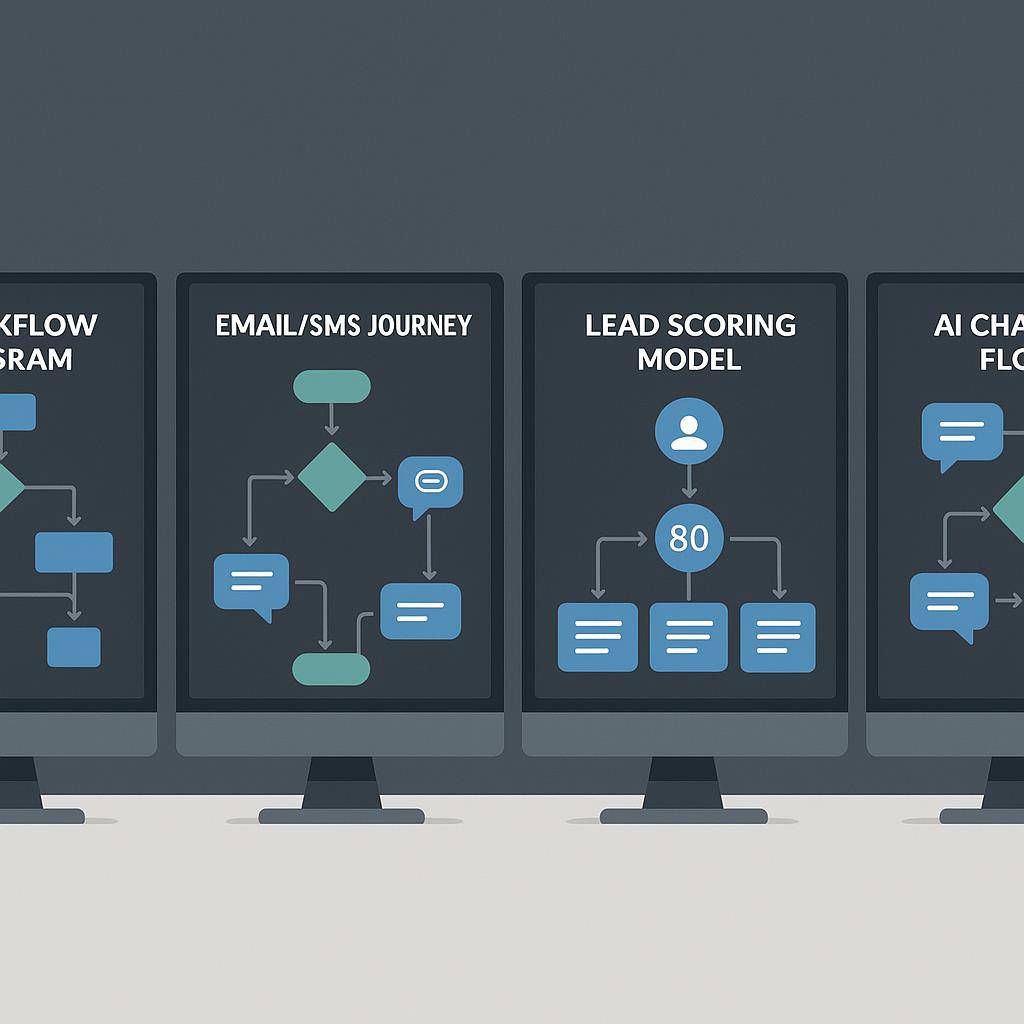
Automate revenue without losing the human touch
Marketing automation and AI consulting are no longer nice-to-haves. They are how growth teams scale revenue, deliver 1:1 experiences, and protect margin without burning out people or budgets. The key is pairing thoughtful strategy with trustworthy automation so you never sacrifice empathy for efficiency.
Done well, automation removes repetitive work, enriches data, and connects touchpoints across email, ads, chat, and your website. AI adds the intuition—predicting intent, recommending next-best actions, and generating content variants that feel personal, not robotic.
This guide shows you how to operationalize intelligent marketing automation end to end: from acquisition and lead nurturing to retention and expansion—grounded in clean data, clear governance, and measurable ROI. If you want a faster path to value, leverage expert support from digital marketing specialists who understand systems and outcomes, not just tools.
Quick Summary: Tools, workflows, and realistic ROI
Here is the practical blueprint teams use to deploy marketing automation and AI consulting with confidence and speed.
- Core stack: CRM + MAP (HubSpot, Marketo, Salesforce MC, Klaviyo/Customer.io), CDP/analytics (Segment, Mixpanel, GA4), data warehouse, product catalog, and consent management.
- AI layers: Chatbots (Intercom, Drift), recommendations (behavioral + catalog), content assists (headlines, subject lines, image prompts), and predictive scoring for MQL/SQL handoffs.
- Workflows: Lead capture and routing, nurture sequences, cart/browse abandonment, onboarding, reactivation, win-back, referral, and customer expansion plays.
- Governance: Clean data, permissioning, QA checklists, naming conventions, and change control for reliable releases.
- ROI you can expect: 10–30% lift in email revenue within 60–90 days, 15–25% faster speed-to-lead, 10–20% decrease in CAC via better routing and suppression, and measurable gains in LTV from targeted upsell and renewal.
To accelerate launch and learning curves, consider expert partners such as SEO services for demand capture, PPC optimization for rapid testing, and specialized support for website development and UX. For niche growth motions, explore B2B programs and SaaS funnels.
Lifecycle Automation: Acquisition to retention journeys
High-performing teams orchestrate journeys across the full lifecycle. Automations should respect context, consent, and channel preferences while moving buyers forward with value.
- Acquisition: Trigger nurture when a lead downloads content, attends a webinar, or uses the pricing page. Use progressive profiling and UTM capture to tailor messages by intent stage.
- Activation: Onboard users with stepwise guidance, feature milestones, and in-product tips. Send behavior-triggered emails/SMS when users stall, paired with in-app nudges and chat.
- Conversion: Employ lead scoring to prompt sales when readiness spikes. Send dynamic content (case studies, ROI calculators) aligned to industry and role. Suppress paid retargeting when a contact is already engaged via email to reduce waste.
- Retention: Build health scoring and churn risk alerts. Trigger content for habit formation, usage expansion, and community engagement.
- Expansion: Launch targeted cross-sell and upsell journeys tied to product adoption, contract anniversaries, and firmographics.
Ecommerce teams should complement these journeys with catalog-aware flows: browse and cart abandonment, back-in-stock, price drop, and post-purchase upsell—supported by e-commerce website foundations and store management services. B2B teams can align handoffs via SLAs tied to MQL/SQL definitions and sales engagement quality, especially in complex cycles such as technology markets.
Data & Scoring: Events, enrichment, lead qualification
Automation fails without dependable data. Invest early in collection, structure, and governance so AI models and workflows stay accurate.
- Event tracking: Define a consistent schema for signups, pricing views, feature usage, add-to-cart, checkouts, and cancellations. Use server-side events where possible to improve reliability.
- Identity resolution: Stitch anonymous and known profiles using device IDs, email, and login events. Maintain a golden customer record in your CDP or CRM.
- Enrichment: Append industry, company size, tech stack, and revenue signals to improve segmentation and sales prioritization.
- Scoring models: Balance behavioral (recency, frequency, intensity), fit (firmographic/demographic), and intent (content depth, pricing checks, demo requests). Recalibrate quarterly using conversion data.
- Qualification: Gate offers by score thresholds but keep escape hatches for high-intent behaviors (e.g., “book a demo”). Suppress low-fit audiences from paid and email to protect sender reputation and CAC.
Connect your analytics to revenue reporting and multitouch attribution so you can prove lift from automation, not just activity volume. If your team needs help, pair lifecycle design with security-conscious data practices and experienced ops partners.
AI Assist: Chatbots, recommendations, content assists
AI becomes your force multiplier when it augments, not replaces, your team. Use it to remove toil and reveal opportunities your analysts cannot see at scale.
- Conversational chat: Deploy site and in-app bots for FAQs, qualification, and instant routing to sales or support. Train on documentation and high-performing content to keep answers accurate.
- Recommendations: Blend behavioral data and product metadata for next-best product, article, or feature suggestions. Test placement and rank models by cohort and lifecycle stage.
- Content assists: Generate subject lines, CTAs, and copy variations; then let humans refine tone. Build content snippets (by industry, persona, pain points) that slot into messages dynamically.
- Analytics copilots: Summarize anomalies, forecast pipeline, and surface campaigns needing attention based on lift, fatigue, or send-time decay.
Keep humans in the loop with approval steps and rollback plans. Pair AI experimentation with a governance playbook to minimize risk while maximizing learning. For deeper model selection and integration, consult trusted experts like AI Consulting or connect your bot to mobile app experiences where contextual prompts boost engagement.
Ops & Governance: Clean data, compliance, QA
Scale breaks without operational discipline. A lean governance framework gives you speed, safety, and repeatability.
- Naming and versioning: Standardize campaign, journey, and asset names; maintain a changelog for audits and rollbacks.
- Data hygiene: Normalize fields (countries, job titles), deduplicate contacts, and implement automated validation on key properties.
- Compliance: Honor GDPR/CCPA, consent states, double opt-in, and data minimization. Configure SPF/DKIM/DMARC and maintain suppression lists to protect deliverability.
- QA and monitoring: Use preflight checklists, seed testing, device previews, and live dashboards for send errors and bounce spikes. Establish incident playbooks.
- Access controls: Least-privilege permissions and approval gates for production sends. Schedule regular audits.
Build this muscle once and reuse it across launches. Consider a partner for ongoing maturity improvements, from technical SEO to platform governance inside broader digital programs.
Roadmap: 30-60-90 day rollout plan
Use this time-boxed plan to launch meaningful automation fast—without boiling the ocean.
- Days 1–30: Foundation and quick wins
- Audit data flows, consent capture, and existing journeys. Fix tracking gaps on high-intent pages (pricing, demo, checkout).
- Stand up core journeys: welcome/nurture, cart/browse abandonment, and basic lead routing. Ship one AI-assisted content experiment (subject line testing).
- Define scoring v1 and align on MQL/SQL SLAs with sales. Stand up reporting for conversion and revenue by journey.
- Days 31–60: Scale and personalization
- Expand triggers (product milestones, industry-specific tracks). Add dynamic content blocks by persona and lifecycle.
- Enable chatbot with routing and knowledge base grounding. Launch suppression rules for paid when email engagement is active.
- Implement A/B and holdout tests with clear success metrics. Start catalog-aware recommendations for e-commerce or content.
- Days 61–90: Optimization and governance
- Refine scoring with early conversion data; add enrichment. Roll out reactivation and win-back journeys.
- Codify QA, naming, and approval workflows. Automate list hygiene and bounce handling.
- Publish an executive dashboard with pipeline, revenue contribution, LTV/CAC, and deliverability health. Plan the next quarter’s experiments.
Support this plan with targeted services—PPC for rapid testing, SEO for intent capture, and operational help from ecommerce management where relevant.
Recommended Partners: AI Consulting by TMAT Network and Email Marketing Services
Launch faster with specialists who have shipped automation across industries and stacks.
- Strategy and AI architecture: AI Consulting maps business goals to data, models, and workflows—prioritizing impact, governance, and integration with your CRM, CDP, and marketing tools.
- Lifecycle execution: Email Marketing Services operationalizes campaigns, journeys, and deliverability best practices with continuous testing and reporting.
Operating in a specialized market? Explore vertical playbooks with partners like B2B Digital Marketing or SaaS Digital Marketing Agency for go-to-market motions that match your sales cycle.
Conclusion: Ship high-impact automations fast — book a strategy workshop
Automation should serve your buyers and your bottom line. When you combine smart data, empathetic messaging, and AI assistance, you create experiences that feel human—at scale—while giving your team time back to focus on strategy.
Ready to prioritize high-ROI journeys and stand up a robust ops backbone? Book a strategy workshop with AI Consulting and align vision, tools, and execution in weeks, not quarters.
FAQ: Which tools? How to measure lift? How to avoid spam? Needed data? Team training required?
Which tools work best for marketing automation?
Choose a platform that fits your motion and data maturity. HubSpot and Klaviyo shine for speed; Marketo and Salesforce Marketing Cloud for complex enterprise orchestration; Customer.io for product-led growth. Pair with a CDP (Segment) or analytics (Mixpanel/GA4) and your CRM. Enrich with Clearbit or similar to improve routing and segmentation.
How do we measure lift from automation and AI?
Use holdout groups, A/B tests, and pre/post baselines. Track leading indicators (speed-to-lead, activation rate, deliverability) and lagging outcomes (pipeline, revenue, LTV, churn). Attribute revenue by journey and channel, and compare against matched controls to isolate lift.
How do we avoid spam and protect deliverability?
Honor consent, send at sensible frequencies, and suppress disengaged contacts. Maintain list hygiene (bounces, traps), authenticate email (SPF/DKIM/DMARC), and segment by behavior and intent. Align content to value, not volume. If your list needs a reset, partner with Email Marketing Services.
What data is required to personalize effectively?
Core requirements: contact and account data, consent and channel preferences, website/app events (signups, pricing views, feature use), campaign engagements, and product catalog or content metadata. Add enrichment (industry, size, tech stack) for better routing and scoring.
Does our team need training to manage this stack?
Yes—train on platform fundamentals, naming conventions, QA, and analytics. Start with a center-of-excellence playbook: journeys, scoring, testing, and governance. Reinforce via office hours and quarterly calibration. For hands-on enablement, collaborate with digital marketing experts who build, document, and upskill simultaneously.


 Quick Response